

Commercial Electrician in Oakville - Your Go-To Guide for Hiring
A breaker failure during dinner service can cost thousands per minute, and not every electrician who claims commercial experience actually meets Ontario's rigorous licensing standards. Here's what to verify before signing that contract.
Key Takeaways
- Hiring a commercial electrician in Oakville requires checking licensing, understanding the services they should offer, and knowing what permits and inspections the law requires
- Ontario electricians complete extensive combined on-the-job and in-class training, including 840 hours of in-school instruction, over roughly a five-year apprenticeship before earning their licence
- Commercial electrician hourly rates typically run up to $150 or more, and a full build can take considerable time to complete from start to finish
- Most commercial electrical work requires a permit and an Electrical Safety Authority inspection, and property owners carry legal responsibility for compliance
- Asking the right questions before signing a contract, covering licensing proof, pricing breakdowns, and emergency response, helps avoid costly surprises later
Commercial properties run on tighter margins for error than homes do. Higher voltage systems, three-phase power, and equipment that keeps a business running mean an electrical problem can shut down operations rather than just flicker a lightbulb. Knowing what to look for before signing a contract saves property managers and business owners time, money, and unnecessary risk.

Why Commercial Wiring Demands Higher Standards
Commercial electrical systems carry a much heavier load than the wiring in a typical house. Office towers, retail plazas, and warehouses often run on voltages between 120V and 480V, including three-phase power configurations that residential electricians rarely encounter. This complexity means mistakes affect dozens of tenants, employees, or customers at once rather than a single household.
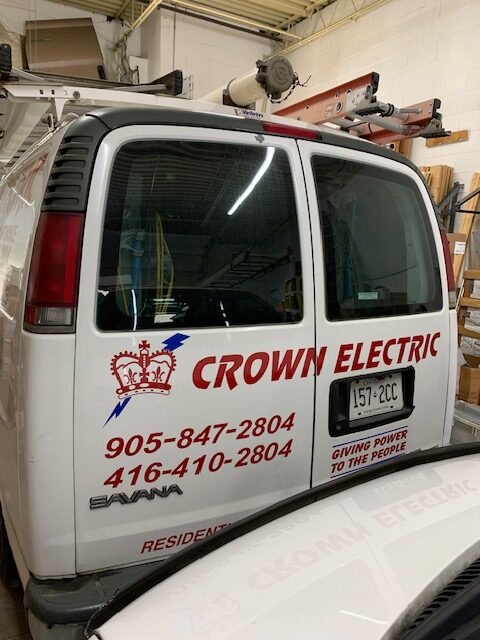
Beyond load capacity, commercial buildings face greater scrutiny because downtime carries real financial consequences. A breaker panel failure at a restaurant during dinner service or a lighting outage at a retail plaza on a Saturday afternoon costs money every minute the lights stay off. That pressure explains why commercial electrical work is held to stricter safety standards than residential jobs, and why the people doing the work need training that goes well beyond basic wiring skills. Crown Electric Ltd has spent over three decades working across office, retail, and industrial settings in the Oakville area, and that kind of hands-on experience with varied commercial systems is worth asking about when interviewing electrical contractors.
Improper wiring, overloaded circuits, and faulty grounding are common culprits behind electrical fires and workplace injuries in commercial buildings. These risks multiply in older properties that were never designed for today's equipment loads, or in spaces that have been renovated multiple times without updated electrical planning. A qualified commercial electrician spots these red flags during an initial assessment, long before they turn into an emergency call.

What Licensing Actually Requires
Not every electrician who advertises "commercial services" has the training needed for complex builds. Ontario sets a clear, demanding path toward licensing, and understanding that path helps property managers separate genuinely qualified contractors from those cutting corners.
A Five-Year Apprenticeship: On-the-Job and In-School Training
Becoming a licensed electrician in Ontario requires far more than a quick certificate course. Apprentices must complete extensive combined on-the-job and in-class training before they become eligible for licensing, including 840 hours of in-school instruction. That combination amounts to roughly five years of supervised, hands-on learning paired with classroom study covering electrical theory, code requirements, and safety practice.
This lengthy apprenticeship exists for good reason. Commercial work introduces variables that rarely come up in residential settings, from coordinating with fire alarm and data network systems to installing transformers and power distribution panels for heavy machinery. An electrician who has logged those hours has typically seen a much wider range of problems and solutions than someone with a shorter or less rigorous training path.
ECRA/ESA Contractor Licensing and the Electrical Safety Code
Once the apprenticeship and exams are complete, contractors need registration through Ontario's Electrical Safety Authority system, which confirms that a business meets provincial licensing standards. All electrical work performed in Ontario, whether new construction, renovation, retrofit, or maintenance, must comply with the Ontario Electrical Safety Code and the Canadian Electrical Code, which together set the minimum safety benchmarks for design and installation.
Asking to see proof of ECRA/ESA registration is a reasonable and expected question during the hiring process. A properly licensed contractor keeps this documentation ready without hesitation, and checking it upfront avoids painful surprises later, such as a failed inspection or a project flagged for non-compliance.
Services a Commercial Electrician Should Offer
A commercial electrician's job goes well beyond running wire from point A to point B. Business owners should expect a contractor capable of handling everything from routine maintenance to large-scale installations, often while coordinating with other trades on-site.
Installations, Upgrades and Lighting Design
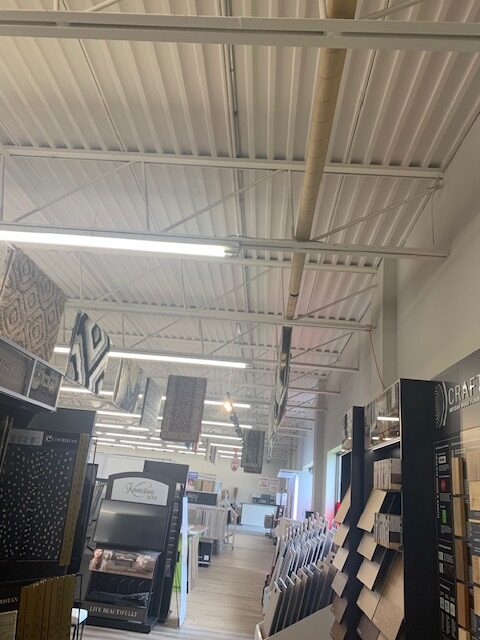
Commercial electricians install and maintain power distribution panels, lighting arrays, emergency lighting, fire alarm wiring, security systems, and increasingly, data network cabling. Retail stores, schools, hospitals, and warehouses each have distinct needs, and a contractor who has worked across those settings brings practical insight that generic wiring knowledge cannot replace.
Lighting design deserves particular attention, since it affects both energy costs and everyday functionality. A well-planned lighting retrofit can lower operating costs while improving safety in parking lots, stairwells, and work areas. Exterior and security lighting fall into this category too, and they're often overlooked until a break-in or a liability claim makes the gap obvious.
Generators, EV Chargers and Emergency Response
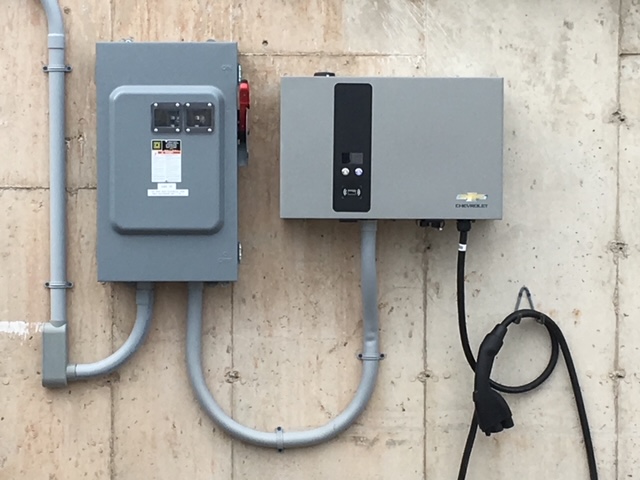
Business continuity planning increasingly includes standby generators, which keep critical systems running during outages, whether that means refrigeration at a grocery store or servers at a data centre. As electric vehicles become more common on the road, businesses are also installing EV charging stations for employees, customers, and fleet vehicles, ranging from Level 2 chargers in a parking lot to Level 3 DC fast charging for high-traffic locations.
Emergency response capability rounds out a well-equipped commercial electrician's offerings. Power failures and equipment malfunctions do not wait for business hours, so same-day or after-hours response can be the difference between a short disruption and a costly shutdown. Property managers should confirm whether a contractor offers this kind of rapid response before an emergency happens rather than during one.

Permits, Inspections and Your Legal Obligations
Most commercial electrical work in Ontario requires a permit, and that permit typically triggers an inspection by the Electrical Safety Authority to confirm the work meets the Ontario Electrical Safety Code. Skipping this step is not a shortcut worth taking. Property owners and managers carry legal responsibility for ensuring electrical work on their properties meets code and that the required notifications get filed with the ESA.
A licensed electrician handles this process as a matter of course, submitting accurate permit applications and coordinating inspection scheduling so the project moves forward without unnecessary delays. This matters for insurance purposes as well. Uninspected or non-compliant work can complicate an insurance claim if something goes wrong later, leaving the property owner exposed to costs that a proper permit and inspection would have prevented.
What Projects Typically Cost and Take
Hourly Rates and Wiring Costs
Commercial electrician hourly rates generally reach up to $150 or more per hour, with master electricians sometimes charging above that range depending on project complexity. Minor repairs might run around $100, while major electrical upgrades can climb past $5,000, and large rewiring projects cost considerably more depending on scope.
Wiring costs are usually calculated per linear foot rather than as a flat fee. Industry pricing estimates put standard commercial wiring installation at $4 to $8 per linear foot, while specialized or industrial systems, such as those needed for heavy machinery or refrigeration equipment, can run $8 to $15 or more per foot. These figures give property managers a rough framework for budgeting, though every quote should reflect the specific scope of the job after a proper site assessment.
Timelines From Rough-In to Sign-Off
Commercial construction timelines vary widely depending on the size and complexity of the project, with a full build often taking considerable time from planning through completion. Within that broader schedule, the mechanical, electrical, and plumbing rough-in phase alone can take anywhere from a few weeks to a few months, since it requires close coordination between electricians, plumbers, and HVAC crews working in the same spaces.
Smaller commercial jobs, like a lighting retrofit or an EV charger installation, move much faster and can often be planned and completed within a few weeks once design, permitting, and installation stages are scheduled. Business owners tackling a tenant improvement or a single-system upgrade should expect a shorter timeline than a full new build, but should still budget time for permit approval and inspection sign-off.

Questions to Ask Before You Sign
A short list of pointed questions during the hiring process can prevent costly missteps later. Before signing a contract, property managers and business owners should ask:
- Is the contractor registered with the ECRA/ESA, and can they provide proof of licensing and insurance?
- How many years of commercial-specific experience does the team have, and with what types of properties?
- What does the estimate include, and is pricing itemized by labour, materials, and permit fees?
- Who handles the permit application and inspection scheduling with the Electrical Safety Authority?
- What is the expected timeline from initial site visit to final sign-off?
- Is emergency or after-hours response available, and how quickly can a technician typically respond?
Clear answers to these questions signal a contractor running a professional operation. Vague or evasive responses are worth treating as a warning sign.
A Licensed Electrician Protects Your Property
Hiring a licensed commercial electrician comes down to risk management. Faulty wiring, overloaded circuits, and non-compliant installations create fire hazards, safety liabilities, and potential insurance headaches that far outweigh any short-term savings from cutting corners on qualifications. A properly licensed and insured contractor also protects property owners from unforeseen liability, since that insurance typically covers accidental property damage and worker injuries that might occur during the job.
Beyond the legal and financial protection, working with an experienced commercial electrician means fewer surprises throughout the project, from accurate upfront quotes to permits that clear inspection on the first attempt. Property managers weighing quotes and credentials can look to well-established commercial electrical services in Oakville as a practical benchmark for what a qualified contractor should bring to the table.
Frequently Asked Questions
1. What services does Crown Electric Ltd. offer for commercial buildings in Oakville?
Crown Electric Ltd. provides a full range of commercial electrical services in Oakville, Ontario, including installations and upgrades, exterior/security lighting, EV charger and DC fast station installation, standby generators, equipment wiring, and safety inspections.
2. How long will it take Crown Electric Ltd. to complete a commercial electrical project?
Our team typically begins with a site visit and assessment. Depending on the project scope—like lighting retrofits or EV charger installation—jobs are planned with clear timelines for design, permitting, installation, and safety testing, usually within a few weeks.
3. Are your electricians licensed and insured in Oakville?
Yes. Crown Electric Ltd. is a fully licensed and insured commercial electrical contractor registered in Ontario. With over 30 years of experience, we ensure all work meets building codes and high safety standards.
4. Do you provide emergency electrical services for commercial clients?
Absolutely. Crown Electric Ltd. offers emergency electrical response in Oakville to handle urgent commercial issues like power failures or equipment malfunctions, aiming for fast and reliable service.
5. How can I arrange a commercial electrical service or estimate in Oakville?
Contact Crown Electric Ltd. at 905‑847‑2804 or via email to schedule a site visit in Oakville, Ontario. We’ll assess your needs, prepare a detailed quote, and guide you through permit handling and installation planning.