

EV Charger Installation in Burlington: A Complete Guide for Homeowners and Businesses
Thinking about charging your EV at home in Burlington? The speed difference between charger levels is bigger than you'd expect, and skipping one essential permit step could cost you when you sell your home. Here's what to know first.
Key Takeaways
- Home charging with a Level 2 unit can cut charge times from over 12 hours to as little as 3-8 hours, making overnight charging far more practical than relying on public stations.
- Burlington homeowners can expect EV charger installation costs to fall between $800 and $2,000, depending on panel location, charger type and whether a panel upgrade is needed.
- Every EV charger installation in Ontario requires an Electrical Safety Authority permit and must be completed by a licensed electrical contractor.
- Businesses that install EV chargers may qualify for funding programs and can benefit from increased foot traffic as more drivers choose destinations with charging available.
- Curious how permits, panel capacity and installation timelines fit together in Burlington? The full breakdown below walks through each factor step by step.
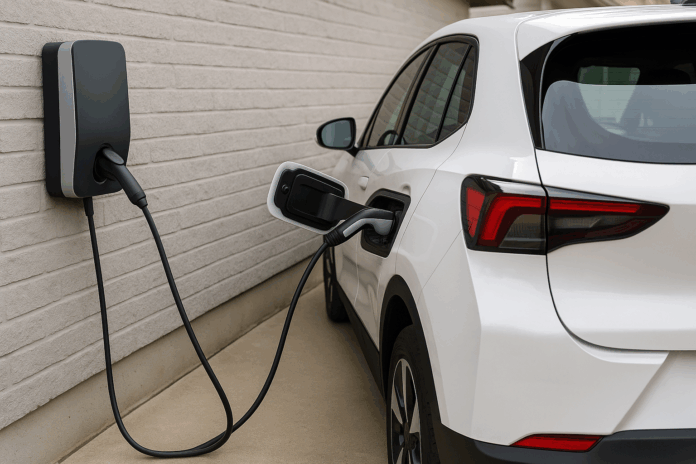
Electric vehicles are becoming a common sight on Burlington driveways, and with that shift comes a practical question: where does charging actually happen? For most drivers, the answer is home. Setting up a dedicated charging station means never planning a trip around finding a working public plug, and it can turn charging into a background task that happens while the household sleeps.
Home Charging Beats Public Stations
Charging an electric vehicle at home provides a level of convenience that public charging simply cannot match. There is no waiting for a stall to open, no wondering whether a nearby station is out of service, and no detour added to an already busy day. Plugging in overnight means waking up to a fully charged vehicle, ready for the commute, school run or weekend errands without a second thought.
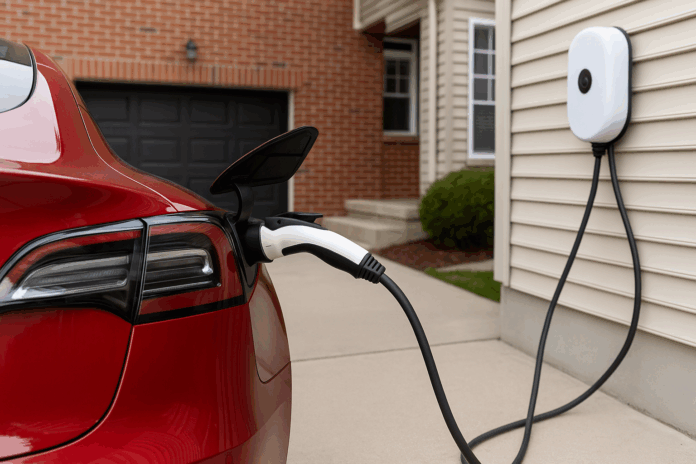
The savings extend beyond time. A standard 120-volt outlet can take more than 12 hours to fully charge a vehicle, but installing a Level 2 EV charger with a 240-volt outlet can shrink that window down to just 3 to 8 hours, depending on the vehicle. That difference matters for households with more than one EV or for anyone who drives longer distances during the week. Crown Electric Ltd helps homeowners in Burlington weigh these charging options and choose the setup that fits their driveway or garage.
Businesses are watching this trend too, since employees and customers increasingly expect charging access wherever they park for extended periods. Before comparing chargers or costs, it helps to understand the three levels of EV charging equipment and how each one fits different needs.
Charger Levels Compared
Not all EV chargers work the same way, and choosing the right level depends on how quickly a vehicle needs to be ready and where it will be charging. Each level presents a different balance of speed, cost and installation complexity.
Level 1: Slow And Simple
Level 1 charging uses a standard 120-volt household outlet, the same type used for lamps or small appliances. It requires no special equipment beyond the cable that typically comes with the vehicle, making it the simplest option to start with.
The trade-off is speed. Level 1 charging adds roughly eight kilometres of range per hour, meaning a full charge can take anywhere from 20 to 40-plus hours. For drivers with short daily commutes and plenty of overnight hours to spare, this may be enough. For most households, though, it works better as a backup than a primary charging method.
Level 2: The Home Standard
Level 2 charging runs on 240-volt power, the same voltage used by a stove or clothes dryer, and it is the setup most homeowners choose. A Level 2 charger can fully charge most EVs in four to eight hours while adding about 30 to 35 kilometres of range per hour, a marked improvement over Level 1.
This is the charger type recommended most often for residential installations because it strikes a practical balance between cost, charging speed and the electrical capacity most homes can support. Whether the goal is charging overnight in a garage or topping up during the day in a driveway, a Level 2 setup covers the vast majority of everyday driving needs.
Level 3: Fast Charging Explained
Level 3, also known as DC fast charging, sits in a different category entirely. These stations can add 200 to 300-plus kilometres of range in about 30 minutes, making them ideal for road trips or quick top-ups rather than daily home use. The equipment and electrical infrastructure required for Level 3 charging are far more substantial, which is why these stations are typically found along highways or at commercial locations rather than in residential garages.
Permits, Panels And Compliance
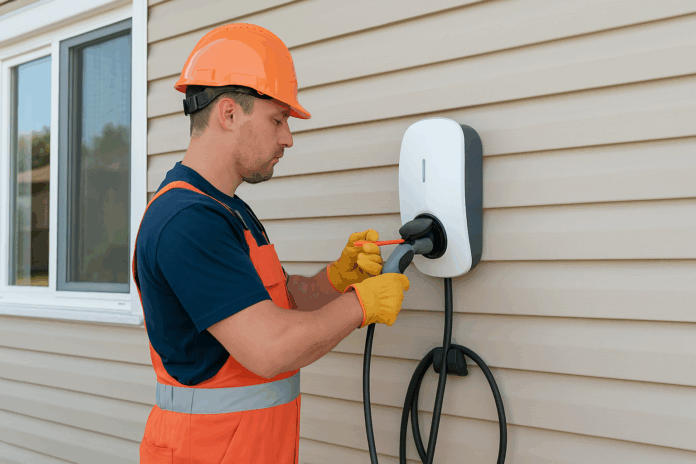
Installing an EV charger involves more than mounting a unit on the wall. In Ontario, an Electrical Safety Authority permit is required for EV charger installations in garages, parking lots and industrial buildings, and this step exists to confirm the work meets provincial safety codes. Skipping this permit is not a shortcut worth taking, since it can create insurance complications, safety risks, potential fines and headaches when it comes time to sell the property.
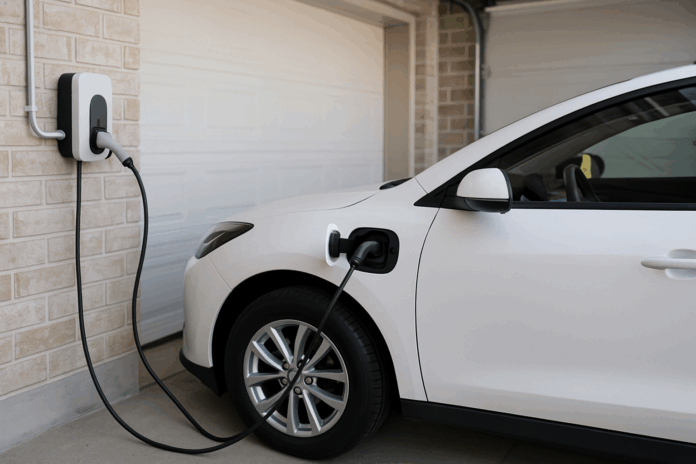
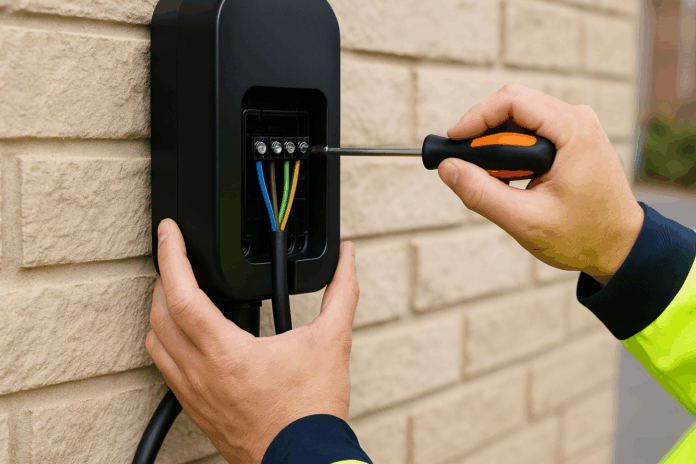
Only a licensed electrical contractor can legally carry out EV charger installations in Ontario, which is worth confirming before hiring anyone for the job. A qualified electrician will also assess the home's electrical panel to determine whether it has enough capacity for the new charger or whether an upgrade is needed first. Most installations take place in one of the following locations:
- Residential garages or driveways
- Underground condo parking areas
- Exterior walls with accessible space
- Commercial parking lots or storefronts
Wherever the electrical panel can be safely accessed, a licensed electrician can extend power to the charging unit while keeping the installation fully compliant with local building codes.
Installation Cost And Timeline
Cost is often the first question homeowners ask, and the answer depends on a handful of variables. Installing an EV charger typically costs between $800 and $2,000, with the final price shaped by factors such as the distance between the panel and the charging location, the type of charger selected, permit and labour costs, and whether the project requires trenching or a full panel upgrade.
Timeline tends to be shorter than most people expect. Once a quote is approved, installation is usually completed within 2 to 3 days, and the actual hands-on work often takes just a few hours. Most projects are non-invasive and do not require structural changes to the home, which keeps disruption to a minimum. For homeowners budgeting for the project, it helps to know upfront whether the electrical panel is already close to the charging location and has enough spare capacity, since long wire runs or panel upgrades are the two factors most likely to push costs toward the higher end of the range.
Why Businesses Are Charging Ahead
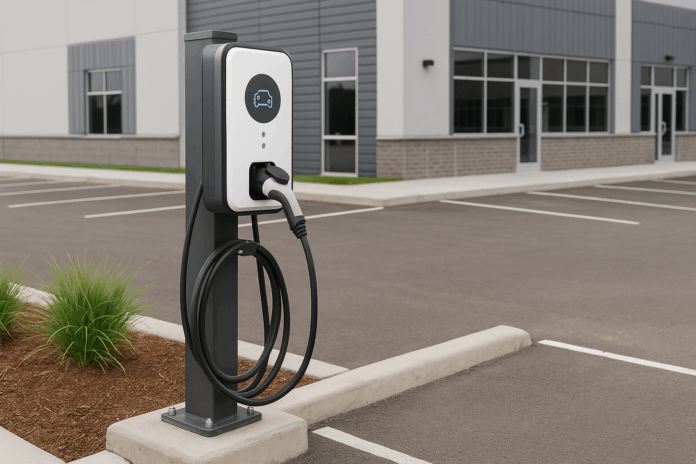
Commercial properties are increasingly adding EV charging as a standard amenity rather than a novelty. Apartment complexes, office buildings and retail centres are installing higher-capacity units capable of serving multiple vehicles at once, positioning themselves ahead of a demand curve that keeps climbing as more drivers switch to electric vehicles.
Rebates And Funding Programs
Funding support has made commercial installations more accessible for property owners. Ontario's EV ChargeON program offers funding coverage of up to 75% of eligible EV charging project costs, up to $1 million per project, for public EV charging infrastructure, without a per-port funding cap. Separately, the EV Charger Incentive Program from Green Economy Canada, funded by Natural Resources Canada, provides a rebate covering up to 50% of total project costs, to a maximum of $100,000 per organization, for organizations installing Level 2 and DC fast charging stations in Ontario. Level 2 funding is calculated per port, up to $5,000 per port, while DC fast charging funding applies per charging station, with a maximum of $15,000 for units in the 20-49 kW range and higher maximums available for larger-capacity stations. Eligible costs generally include the purchase and installation of charging stations, related electrical and site upgrades, labour and contractor fees, and permitting or inspection costs. Programs and funding caps do shift over time, so confirming current eligibility before starting a commercial project is a smart first step.
Attracting Customers And Foot Traffic
Beyond funding, there is a business case rooted in customer behaviour. EV drivers increasingly factor charging availability into decisions about where to shop and dine, turning a charging station into more than a convenience feature. Research from MIT found that installing one EV charging station boosted annual spending at a nearby establishment by 1.4% in 2019, though that lift eased in the years that followed. For a retail centre or office building, that kind of foot traffic boost, paired with the marketing value of green branding, makes EV charging a strategic investment rather than a purely operational one.
A Smart Investment For Burlington
Whether the goal is overnight convenience at home or attracting customers to a commercial property, EV charger installation delivers value that compounds over time. Homeowners gain a dependable charging routine that eliminates guesswork, while businesses position themselves for a future where electric vehicles are the norm rather than the exception. Getting the permits, panel assessment and charger selection right from the start makes the difference between a smooth installation and a costly redo down the line.
For those ready to move forward, working with a licensed electrician in Burlington ensures the entire process, from panel evaluation to ESA compliance, is handled correctly the first time.