

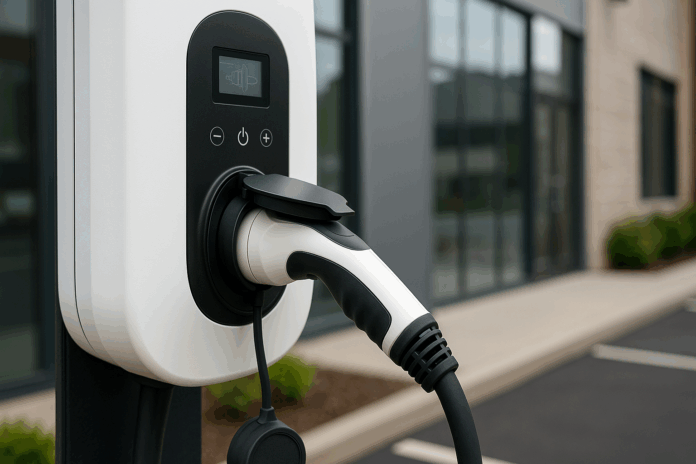
EV Charger Installation in Oakville: A Smart Move for Homeowners and Businesses
Thinking about installing an EV charger at your Oakville home? Before you buy anything, there's a permit rule and a licensing requirement most owners overlook - and skipping it could jeopardize your warranty and insurance.
Key Takeaways
- The Electrical Safety Authority requires a permit for every EV charger installation in Ontario before an electrician can begin work
- Level 2 chargers running on a 240-volt circuit are the standard choice for most Oakville homes, charging a vehicle in four to eight hours
- The Electrical Safety Authority restricts EV charger wiring in Ontario to electricians licensed through the ECRA program
- Crown Electric Ltd reports that homeowner-installed Level 2 chargers typically range from $2,000 to $2,500 all-in, including installation and ESA approval
- Planning around panel capacity and permits early can prevent costly surprises later in the installation process
Electric vehicle ownership is climbing steadily across Oakville, Mississauga, Burlington and Etobicoke, and with it comes a common question: what does it actually take to get a charger installed safely at home or at a business? The process involves more than plugging in a cable. It touches permits, panel capacity, wiring standards and the type of charger that fits daily driving habits. Crown Electric Ltd, a family-owned electrical contractor serving the region since 1991, has walked homeowners and business owners through this process for years and shares the essentials below.
Before looking at charger types and costs, it helps to understand the regulatory groundwork that every installation must clear first.
ESA Permits Required Before Any Work Begins
The Electrical Safety Authority requires an electrical permit before any EV charger installation can legally start in Ontario. This applies whether the project is a simple 240-volt outlet in a residential garage or a multi-station setup at a commercial property. The permit process exists to confirm that wiring, breaker sizing and equipment all meet the Ontario Electrical Safety Code, protecting both the property and the people who use it.
Skipping this step is a compliance issue and more; it can complicate insurance claims, create resale headaches, and in worst cases, introduce fire risks tied to overloaded circuits or faulty connections. Getting the permit sorted early keeps the entire project moving smoothly.
Choosing Your Charger Level
The right charger depends on how often a vehicle is driven, how much range needs replenishing overnight, and whether the setup is residential or commercial.
Level 1: Slow And Simple
Level 1 chargers plug into a standard 120-volt household outlet, the same kind used for lamps or small appliances. They add roughly 8 kilometres of range per hour, which makes them slow for daily commuters but workable for plug-in hybrids or drivers who rack up low mileage. No special wiring is required, keeping this option simple and inexpensive.
Level 2: The Home Standard
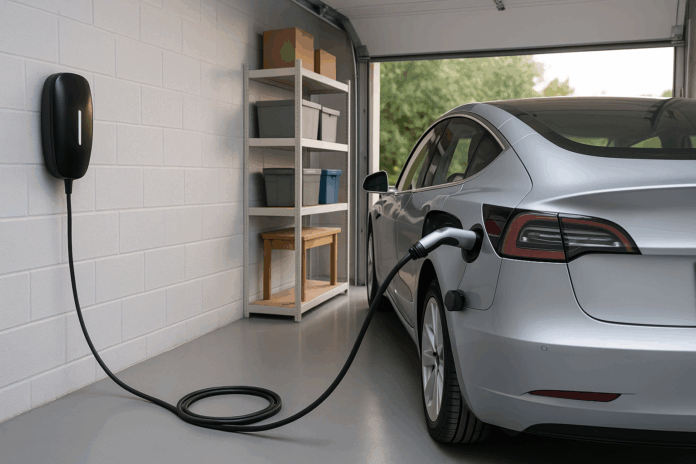
Level 2 chargers are the clear favourite among Oakville homeowners and small businesses. They require a dedicated 240-volt circuit, often rated between 30 and 60 amps, and can fully charge most EVs in four to eight hours overnight. Some models plug into a 240V receptacle similar to a dryer outlet, while others are hardwired directly for a cleaner, more permanent setup. Either way, this level strikes a strong balance between charging speed and installation cost for most households.
Level 3: Commercial Fast Charging
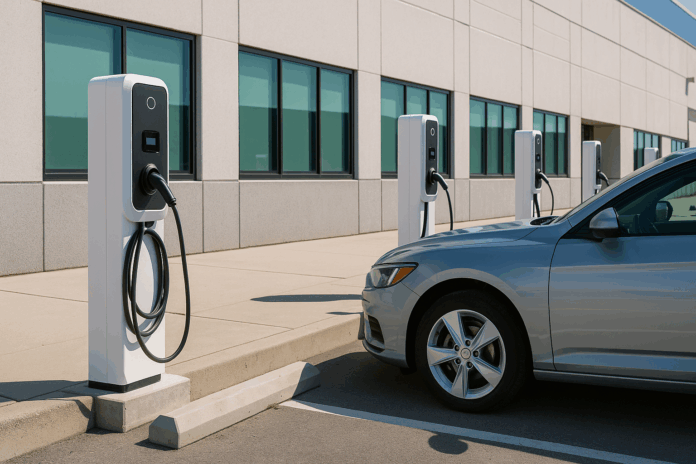
Level 3 DC Fast Chargers belong almost exclusively in commercial or industrial settings. They can charge a vehicle in under an hour, but the power demands and equipment costs make them impractical for a typical home garage. Retail properties, condo buildings, and fleet operators are the more natural fit for this technology.
Permits, Licensing And Installation Steps
Once a charger level is chosen, the actual installation follows a structured sequence designed to keep the property safe and the equipment functioning as intended.
ESA Permits And Panel Assessment
Every project starts with a site visit and a look at the existing electrical panel. An electrician needs to confirm there's enough spare capacity to support the new circuit without overloading the system. This assessment, paired with the ESA permit application, sets the foundation for everything that follows.
Why Only ECRA-Licensed Electricians Qualify
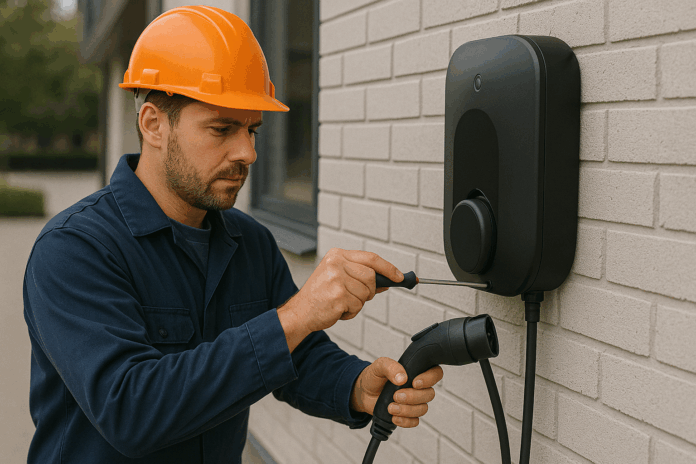
The Electrical Safety Authority limits EV charger wiring work in Ontario to contractors licensed through the ECRA program. Oakville Hydro recommends hiring a licensed electrical contractor for any charging equipment tied into a home's panel. This isn't a bureaucratic formality; licensing ensures the person doing the wiring understands local code requirements, uses equipment certified by a recognized agency such as CSA, UL or Intertek, and carries the insurance needed to protect the homeowner if something goes wrong down the road.
Wiring, Load Calculation And Final Testing
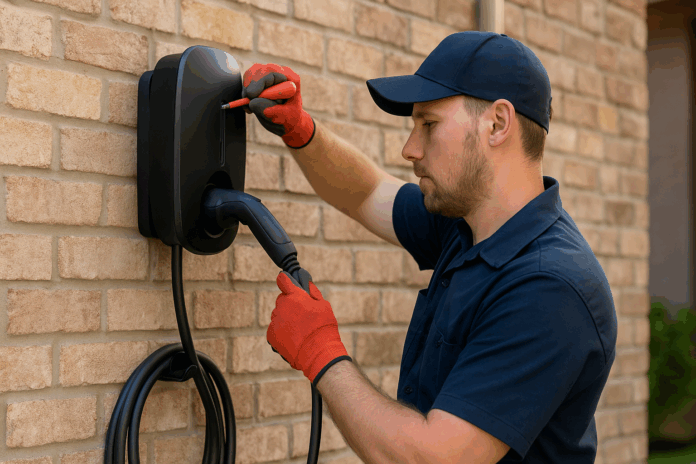
With permits in hand, the electrician calculates the electrical load, runs the wiring, and installs either the 240V outlet or hardwired charging station. A standard Level 2 installation typically takes between two and four hours, though longer wire runs or panel upgrades can stretch the job to a full day. The process wraps up with voltage testing and connection verification, followed by an ESA inspection to confirm everything meets code before the charger goes into regular use.
What Installation Costs In Oakville
Crown Electric Ltd reports that homeowner-installed Level 2 chargers typically range from $2,000 to $2,500 all-in, including installation and ESA approval. This figure reflects the most common residential scenario, though every property is different.
A few factors can shift that number. Distance from the electrical panel to the parking spot adds material and labour time. Homes with older panels may need a panel upgrade before a new circuit can be added safely, which is a separate project with its own scope. Longer wire runs and any additional infrastructure work also play into the final quote, which is why a site visit and written estimate matter more than a generic price guess.
Why Home Charging Pays Off
Beyond the upfront cost, home charging changes the daily rhythm of owning an EV. Plugging in overnight means starting each morning with a full battery, without detours to public stations or waiting behind other drivers. Charging at home, particularly during off-peak hours, can also be considerably cheaper than relying on public charging networks.
There's a longer-term angle too. A properly installed home charger adds a modern, practical feature that appeals to buyers shopping in a market where electric vehicles are becoming more common. For business owners, offering charging on-site can be a similar draw for employees, tenants or customers.
Proper Installation Protects Your Property And Investment
An EV charger is a long-term fixture, not a weekend gadget. Getting the permit, panel assessment and wiring right the first time protects against fire hazards, electrical overload and code violations that can surface years later. It also keeps manufacturer warranties intact, since most EV charger brands require professional installation as a condition of coverage.
Taking the time to work through permits, charger selection and licensed installation pays off in reliability and safety for years of driving ahead. For homeowners ready to move forward, working with a qualified EV charger installation team helps keep the whole process straightforward from first consultation to final inspection.
Frequently Asked Questions
1. What types of EV chargers does Crown Electric Ltd. install in Oakville?
We install Level 1 chargers (120 V), Level 2 chargers (240 V), and commercial DC Fast Chargers (Level 3) throughout Oakville. Level 2 is the most popular for homes, offering a full charge in 4–8 hours.
2. What does the EV charger installation process involve?
Our process includes a site assessment, panel capacity check, obtaining permits and ESA approval, hardwiring or outlet installation, and safety testing. We ensure everything meets Ontario electrical code.
3. Can Crown Electric Ltd. handle commercial EV charger installations too?
Yes! We install both residential garage chargers and multi-station commercial setups, including networked Level 2 stations and Level 3 DC fast chargers for businesses.
4. How much does installing an EV charger usually cost in Oakville?
Costs vary depending on distance from the breaker, site complexity, and permits required. Homeowner-installed Level 2 chargers typically range from $2,000–$2,500 all-in, including installation and ESA approval.
5. Why should I hire Crown Electric Ltd. for EV charger installation in Oakville?
We're a licensed, insured local team with 30+ years’ experience serving Oakville and surrounding areas. We handle panel assessments, code compliance, permits, and safe installs for all charger types.