


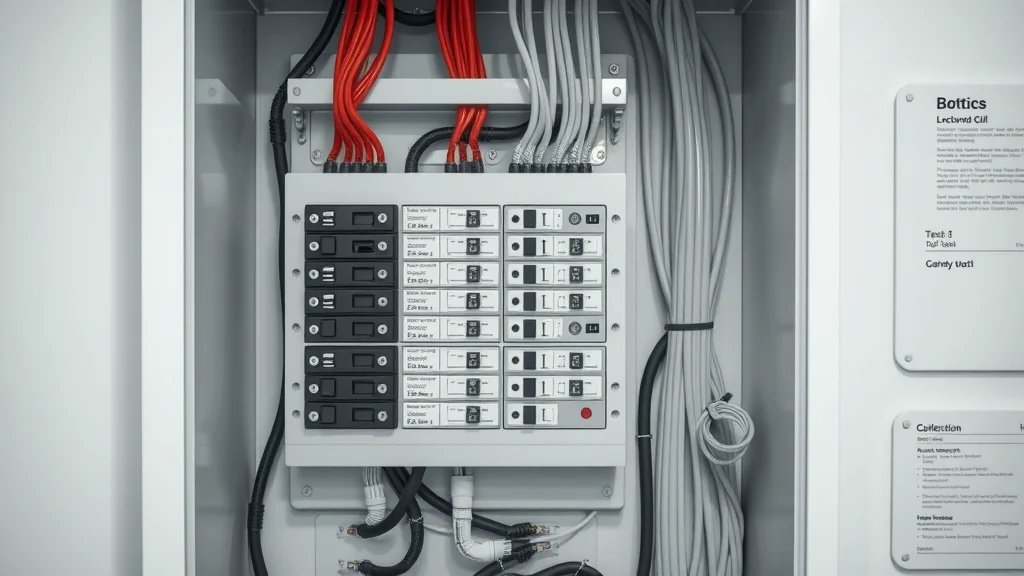
Tripping breakers, flickering lights, an older home with outdated wiring – could your panel be quietly limiting your home’s future? An Oakville electrician breaks down when 100 amps falls short and what upgrading really costs.
Key Takeaways
- Choosing between a 100 amp and 200 amp panel depends on a home’s current electrical load and future plans rather than the age of the wiring alone
- A 100 amp panel delivers up to 24,000 watts at 240 volts, while a 200 amp panel roughly doubles that to about 48,000 watts
- Homes built before 1985 often carry outdated panels that struggle with modern demands like EV chargers, heat pumps, and hot tubs
- 200 amp service has become the practical standard for new home builds in Ontario, though it is no longer a strict code minimum, and a licensed electrical contractor plus an ESA permit are required for any upgrade
- A 100A to 200A panel upgrade in the Oakville area typically runs between $3,500 and $5,500 plus GST, with most jobs finished in a single day
Flickering lights, a breaker that trips every time the microwave and kettle run together, or a home built decades before smart thermostats and electric vehicles existed – these are the moments Oakville homeowners start wondering whether their electrical panel is holding them back. The choice between a 100 amp and a 200 amp panel shapes everything from daily comfort to whether a future EV charger or hot tub can safely plug in. Crown Electric Ltd, a family-owned electrical contracting company that has served Oakville, Mississauga, Burlington, and Etobicoke since 1991, fields this question regularly from homeowners planning renovations or simply tired of tripped breakers.
100 Amp or 200 Amp: The Real Difference
An electrical panel, sometimes called a breaker box or service panel, works as the command centre for a home’s power supply. Its amp rating determines how much electrical load it can safely handle at any given moment, and that number directly affects whether a household can run modern appliances without strain.
A 100 amp panel delivers up to 24,000 watts at 240 volts, which covers basic lighting, a fridge, a stove, and a handful of everyday devices without much trouble. A 200 amp panel roughly doubles that ceiling, providing close to 48,000 watts of capacity – enough headroom for central air conditioning, an EV charger, a hot tub, and a growing list of connected devices, all running at once without overloading the system.
Smaller homes with modest appliance loads and no major additions planned can often get by comfortably on 100 amps. Larger households, homes undergoing renovations, or anyone planning to add high-draw equipment tend to outgrow that ceiling fast, which is why 200 amp service has become the more common recommendation for modern living.
Signs Your Panel Can’t Keep Up
Electrical panels rarely fail without warning. Most give off small, easy-to-miss signals long before a full breakdown, and catching those signs early can prevent a minor inconvenience from becoming a safety hazard.
Tripped Breakers, Flickering Lights and Frequent Outages
A breaker that trips repeatedly, even during normal daily use, points to a system straining under more load than it was built to handle. Lights that dim or flicker whenever a large appliance kicks on – the air conditioner starting up, or the oven preheating – tell a similar story. Frequent, unexplained power outages that aren’t tied to a storm or utility issue are another red flag worth taking seriously, since they often mean the panel is stretched past a safe operating margin.
Older Homes Built Before 1985
Homes built before the 1980s were wired for a very different lifestyle, one without smart thermostats, home offices packed with electronics, or electric vehicles charging overnight in the garage. Many of these properties still run on 100 amp panels, or in some cases, even older 60 amp systems that simply weren’t designed for today’s power-hungry devices and central HVAC systems. An outdated panel in an older home is one of the clearest indicators that an upgrade deserves serious consideration, especially before a renovation adds new circuits and appliances to the mix.
Why 200 Amp Suits Modern Households
Modern households ask a lot from their electrical systems, and 200 amp panels have become the practical standard for keeping up with that demand without constant workarounds.
EV Chargers, Heat Pumps and Hot Tubs
Adding an EV charger, a heat pump for efficient heating and cooling, or a hot tub introduces a level of continuous, high-wattage draw that a 100 amp panel often cannot absorb alongside everything else already running in the house. A 200 amp panel is generally considered the better fit for larger homes, all-electric households, and any property over roughly 2,000 square feet, particularly those with a basement suite or an accessory dwelling unit. Central air conditioning and electric heating additions are common triggers that push homeowners toward the upgrade, since these systems draw steady power for extended periods rather than short bursts.
Ontario Code Minimums for New Builds
Under the Canadian Electrical Code, a home’s electrical service must be sized to handle its calculated demand load. Ontario briefly required a minimum 200 amp service for new home construction, but that mandate was removed in 2019, leaving demand-based sizing as the current rule. Even so, 200 amp service remains the practical choice many builders make, since it helps homes accommodate additions like pools, hot tubs, and EV chargers that weren’t as common when older code minimums were written. Homeowners planning a major addition or a full rewiring project should still expect a demand-load calculation to confirm the right service size for their needs.
Why a Professional Load Calculation Comes First
A proper load calculation is the step that keeps a panel upgrade from becoming a guessing game. This process adds up the power requirements of every major appliance and system in the home – heating, cooling, kitchen equipment, and any planned additions like a heat pump or EV charger – and compares that total against what the existing panel can safely deliver.
Skipping this step is one of the more common mistakes homeowners make when planning a panel upgrade. A licensed electrician factors in details a homeowner might overlook, such as dedicated circuit requirements for EV charging equipment, code compliance nuances, and realistic headroom for future needs like a second EV charger or a home battery system. Getting this calculation right the first time avoids the frustration of installing a panel that already feels tight the moment a new appliance shows up.
What an Upgrade Costs in Oakville
Cost is often the deciding factor for homeowners weighing a 100 amp to 200 amp upgrade, and the range depends heavily on the scope of work involved. In the Oakville area, a 100A to 200A residential panel upgrade typically runs between $3,500 and $5,500 plus GST, with most jobs completed within a single day.
Several factors influence where a specific job lands within that range:
- The age and condition of the home’s existing wiring, since older aluminum or undersized wiring may need additional attention
- How accessible the current panel is, as tricky locations can add labour time
- Whether the service entrance or grounding needs updating alongside the panel itself
- Local permit and inspection requirements tied to the scope of the project
Homeowners should treat any quote with the same scrutiny given to other major home investments, asking specifically what’s included and whether permit fees are already factored into the total.
Permits, Licensing and Code Compliance
In Ontario, only a licensed electrical contractor can lawfully perform a service upgrade, and an Electrical Safety Authority permit is required before work begins. This step confirms the finished installation meets current safety codes and helps prevent hazards down the road.
A typical upgrade project follows a predictable sequence: an initial inspection confirms the home’s current amperage and wiring condition, the ESA permit gets filed before any work starts, the new panel and breakers go in along with any necessary grounding updates, and a final inspection confirms everything meets code before the job is considered complete. Skipping permits or hiring unlicensed help to save money upfront carries real risk, since improperly documented work can complicate home insurance claims and create liability issues at resale. Homeowners considering this kind of project can find a straightforward breakdown of what’s involved through Crown Electric Ltd, which walks through the licensing and inspection steps that keep an upgrade above board from start to finish.
Bigger Panels Mean Fewer Future Upgrades
A 200 amp panel installed today often means one less major electrical project down the road. Households that add an EV charger, then a heat pump, then a hot tub over the following years benefit from having the capacity already built in, rather than facing a second disruptive upgrade each time a new appliance enters the picture.
Beyond convenience, a modern, code-compliant panel supports safer daily operation through more sensitive circuit breakers and updated protections like arc fault and ground fault circuit interrupters. Some insurance providers also offer reduced premiums for homes with updated electrical systems, since the lower fire risk translates into lower claims exposure. For homeowners weighing the upfront cost against years of avoided disruption, sizing up now tends to pay off both in daily reliability and in flexibility for whatever comes next. Anyone unsure where their current setup stands should start with a panel upgrade consultation to get a clear, code-based answer before committing to a project.