


Wondering what you can realistically get done for under $2,000? From GFCI outlets to recessed lighting, the real deciding factor isn’t the job itself, but something hiding inside your electrical panel.
Key Takeaways
- A clear written estimate that spells out labour, materials, permits, and conditions that could change the scope is the best way to keep a small electrical project under $2,000
- A six-light recessed-light installation with a new switch typically runs $900 to $1,800, while a dedicated 240V outlet for an EV charger runs $250 to $800
- Recessed lighting generally costs $200 to $400 per fixture and a standard ceiling fan installation usually adds $100 to $250 in labour
- Most electrical work in Ontario requires an ESA permit, and knowing this ahead of time helps homeowners avoid unexpected delays or costs
- Existing panel capacity plays a bigger role in final pricing than most homeowners expect, and the sections below explain exactly when a small job can grow into a bigger one
Plenty of electrical projects around an Oakville home, from swapping a few outlets to adding pot lights in a kitchen, can realistically stay under $2,000. The trick is understanding which jobs naturally fit that budget and knowing what to ask for before any work begins. This breakdown walks through typical price ranges, the role of existing electrical capacity, and what belongs in a solid written estimate.
What Fits Under $2,000
Most small residential electrical jobs share a few traits that keep them affordable: they use existing wiring and panel capacity, they take a few hours rather than a few days, and they don’t require structural changes to walls or ceilings. Smaller residential electrical jobs may take one to four hours to complete, while larger projects involving rewiring or panel work can stretch across several days. That time difference explains much of why costs vary so widely between a quick switch swap and a full renovation project.
Homeowners planning a project under $2,000 are generally looking at single-room upgrades, a handful of new outlets, lighting changes, or a dedicated circuit for one appliance. Crown Electric Ltd builds every quote around a consultation and written estimate, which helps homeowners see exactly where their budget lines up with the scope of work before anything gets started. Knowing the general price range for common jobs, covered next, makes that conversation easier from the first phone call.
Small Jobs And Their Price Range
Pricing for electrical work depends on labour time, materials, and how much of the existing wiring can be reused. The ranges below reflect typical costs for straightforward jobs where the existing electrical system has enough capacity to handle the new work without modification.
Outlets, Switches And GFCI Work
A standard outlet installation typically costs $150 to $300, while a GFCI outlet, the kind required near sinks, bathrooms, and outdoor spaces, usually runs $200 to $400. Replacing an existing outlet or switch is often less involved and tends to fall in the $100 to $250 range, though older boxes or outdated wiring can push that number higher. These jobs are often the easiest to keep well under budget since they rarely require new circuits or panel changes.
Lighting And Ceiling Fan Installs
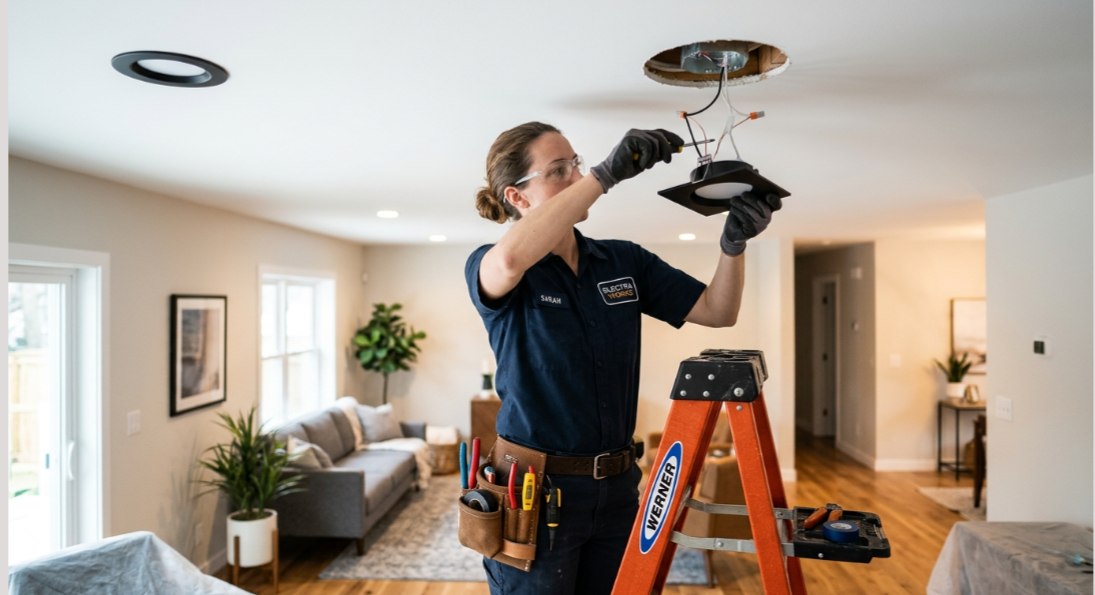
Recessed lighting runs $200 to $400 per fixture, including wiring and installation, and a full project with six recessed lights plus a new switch typically lands between $900 and $1,800. A ceiling light installed where a fixture already exists is usually more affordable than one requiring new wiring run from the panel. Ceiling fans follow a similar pattern: a standard installation runs $100 to $250 in labour, though a ceiling fan needs a fan-rated electrical box to safely handle the vibration and movement that a standard light-fixture box isn’t built for. Adding that fan-rated box, or wiring in a dedicated wall switch, typically adds a modest amount to the total.
EV Charger Outlets And Circuits
For homeowners who just need a dedicated 240V outlet for an EV charger, rather than a full charger installation, pricing generally falls between $250 and $800. This covers the circuit running from the outlet back to the main panel, which is the core requirement for safely powering a charger. A full Level 2 charger installation, including the hardware itself, tends to run well past the $2,000 mark once permit fees, longer cable runs, or finished-wall access come into play, so homeowners hoping to stay under budget should ask specifically about outlet-only pricing versus full charger setup.
Why Existing Capacity Matters
The single biggest factor separating a $500 job from a $3,000 job is often the home’s existing electrical capacity. A panel with room to spare and wiring that reaches the new fixture or outlet without extensive rerouting keeps costs predictable. A panel running close to its limit, or a home with older wiring that needs upgrading before new work can be added safely, changes the math quickly.
When A Job Stays Small
A job tends to stay within a modest budget when the existing panel has open breaker slots, the wiring route is short and accessible, and no structural changes are needed to reach the new outlet, fixture, or switch. Homes with modern copper wiring and panels updated within the last couple of decades are the best candidates for quick, affordable upgrades. In these cases, labour and materials make up nearly the entire cost, with little risk of surprises once work begins.
What Can Push Costs Higher
Several conditions can turn a straightforward job into a bigger project:
- A panel at or near full capacity, requiring a subpanel or upgrade before new circuits can be added
- Long wiring runs between the panel and the new outlet or fixture, especially through finished walls or ceilings
- Older aluminum wiring or outdated boxes that need replacing to meet current code
- Outdoor or detached-garage work requiring trenching or weatherproof conduit
- Drywall repair or painting needed after wiring work is complete
Any one of these conditions can shift a project from the few-hundred-dollar range into the thousands, which is exactly why identifying them before work starts matters so much for staying on budget.
Why Written Estimates Protect Your Budget
A written estimate turns a vague phone quote into a document both the homeowner and the electrician can refer back to if questions come up partway through the job. Verbal estimates leave too much room for miscommunication, especially when a project could shift in scope once walls are opened up or wiring is inspected up close.
What A Clear Estimate Should Include
A dependable estimate spells out more than just a bottom-line number. It should cover:
- Labour costs, broken down by hours or by the job itself
- Materials needed, including any specialty parts like fan-rated boxes or GFCI outlets
- Permit fees, since most electrical work requires an ESA permit
- Conditions that could increase the scope, such as finding outdated wiring once a wall is opened
Homeowners who review each of these line items before approving work are far less likely to face surprise charges partway through a project. A written estimate based on an in-depth consultation, rather than a quick guess over the phone, tends to hold up better once the actual work gets underway.
Permits And Timelines To Expect
Most electrical work in Ontario requires an ESA permit, with only limited exceptions for homeowners doing work on their own property. This applies even to smaller jobs like adding a dedicated circuit or installing new lighting, so homeowners should factor permit coordination into both their timeline and their budget conversation. A licensed electrical contractor typically handles filing the permit directly, which keeps the process moving without extra legwork on the homeowner’s end.
Timelines for small jobs tend to be short. Projects like outlet replacements, lighting installs, or a single dedicated circuit usually wrap up within a few hours, while anything touching the panel itself or requiring inspection may take a bit longer to schedule around permit approval. Planning for this timeline upfront, rather than assuming same-day completion for every job, helps avoid frustration if a permit needs to clear before work can be signed off.
Keeping Small Jobs Small
Staying under $2,000 on an electrical project comes down to matching the scope of work to what the existing system can already handle, then locking in the details with a written estimate before anything begins. Jobs like outlet upgrades, GFCI installs, recessed lighting, ceiling fans, and dedicated EV charger outlets all fit comfortably within that budget range when the panel has capacity and the wiring route is straightforward. Conditions like an aging panel, long wiring runs, or outdated wiring are the usual culprits when a project’s cost climbs higher than expected.
Asking the right questions upfront, requesting a written breakdown of labour, materials, and permits, and understanding what could change the scope are the most reliable ways to protect a budget on any electrical upgrade. For homeowners ready to plan their next project with confidence, reviewing electrical repair and upgrade options before booking a consultation is a practical first step toward keeping costs predictable.