


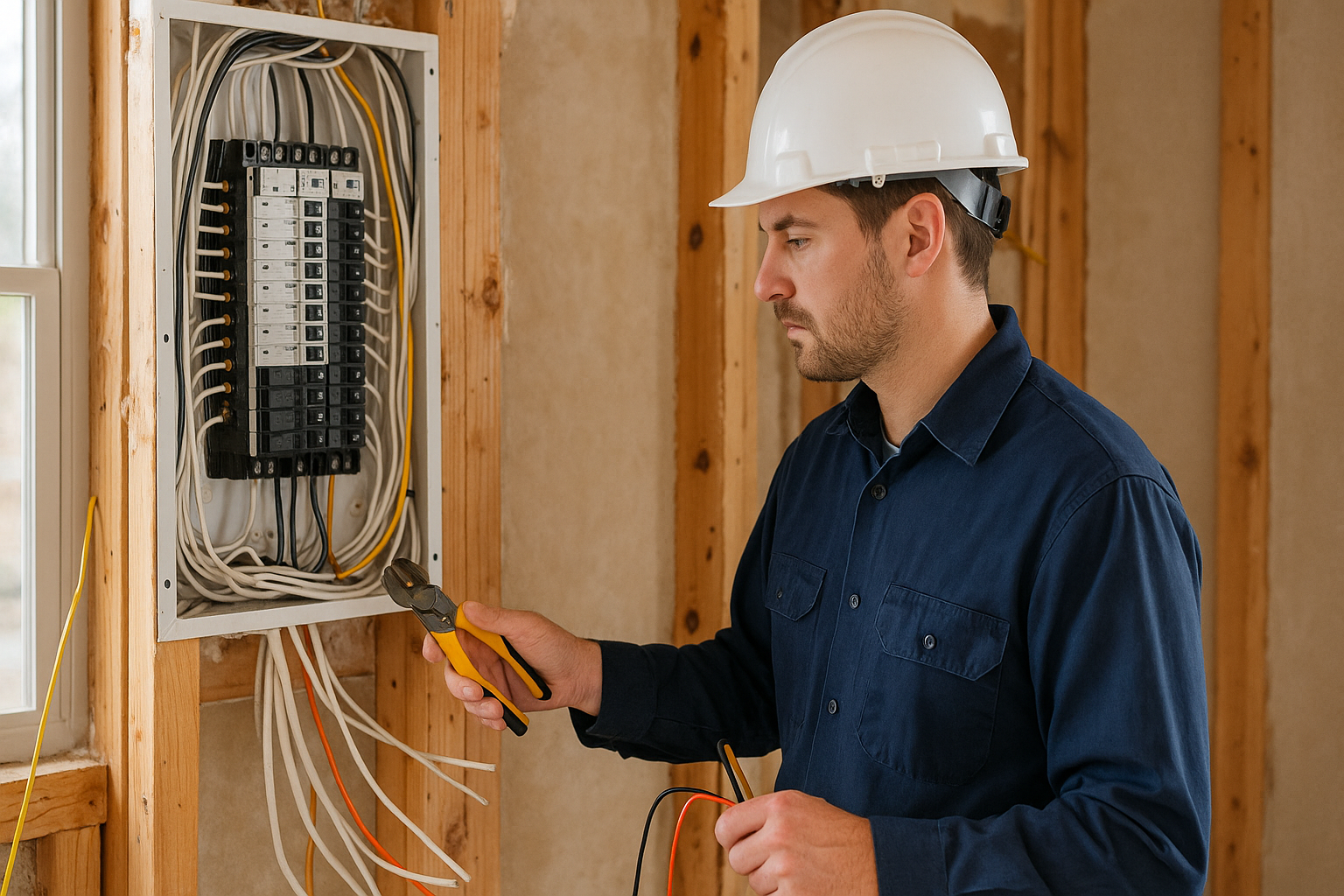
If your Oakville home still has flickering lights, warm outlets, or original wiring from before the 1990s, you could be sitting on a fire hazard. Here’s what actually determines whether rewiring costs you $8,000 or $20,000.
Key Takeaways
- Home rewiring in Oakville typically costs between $8,000 and $20,000, with the final price depending on home size, wiring type, and how much of the house needs work
- Homes built before the 1990s often still run on aging aluminum or knob-and-tube wiring, which raises fire risk and struggles to handle modern electrical demand
- Warning signs like frequent tripped breakers, warm outlets, and two-prong outlets are worth investigating before they turn into a bigger problem
- Ontario law requires ESA notification and inspection for rewiring projects, and skipping that step can void home insurance or delay a home sale
- Most rewiring projects in Oakville take between 5 and 10 days, and a licensed electrician manages the ESA permitting process on the homeowner’s behalf
Older homes have plenty of character, but that charm sometimes comes wrapped around wiring installed decades before smartphones, EVs, or central air were part of daily life. For Oakville homeowners weighing a rewiring project, the big question usually comes down to cost, and the honest answer sits between $8,000 and $20,000. Crown Electric Ltd, which handles complete and partial rewiring projects for older homes across Oakville, Mississauga, Burlington, and Etobicoke, breaks down what shapes that price range and how to know if a rewiring project belongs on the to-do list.
Why Rewiring Costs $8,000-$20,000
Rewiring a home involves a lot more than swapping a few outlets. It means pulling out old wiring throughout the house, running new copper wiring through walls, ceilings, and floors, replacing outlets and switches, and often upgrading the electrical panel so it can handle modern loads. For a typical Oakville home, that full scope of work lands somewhere between $8,000 and $20,000, with the exact number depending heavily on square footage and how much of the house needs new wiring.
Price differences within that range usually come down to accessibility. Homes with plaster-and-lath walls instead of drywall make it harder to fish new wires through tight spaces, which adds labour time and, in turn, cost. A bungalow with an open basement and accessible attic space rewires faster and cheaper than a two-storey character home with finished ceilings and narrow wall cavities throughout.
Does Your Older Home Need Rewiring?
Not every older home needs a full rewire right away, but certain signs point toward a system that has aged past its safe working life. Homes built before the 1990s in Oakville are the most likely candidates, particularly those still running on their original wiring from construction.
Warning Signs to Watch For
A handful of red flags tend to show up together once wiring starts failing:
- Frequent tripped breakers or blown fuses, even during normal household use
- Flickering or dimming lights, especially when multiple appliances run at once
- Warm outlets or switch plates that feel hot to the touch
- Two-prong outlets that lack a proper ground connection
- Burning smells or buzzing sounds coming from walls, outlets, or the panel
Any single item on this list deserves a closer look. Several appearing at once usually means the electrical system is carrying more load than it was ever designed to handle.
Aluminum and Knob-and-Tube Risks
Two wiring types show up again and again in older Oakville homes, and both carry real risk. Aluminum wiring was commonly installed in homes built between the mid-1960s and late 1970s, and it can loosen at connection points as the metal expands and contracts with temperature changes over the years, creating a fire hazard. Knob-and-tube wiring, found in even older homes, lacks a ground wire entirely and was never built to handle the demand of a modern household running multiple appliances, computers, and charging devices at once.
Pigtailing, which involves adding a short length of copper wire to an aluminum connection, provides a partial fix for isolated problem spots. Full replacement with copper wiring throughout the home remains the safer long-term solution, particularly for anyone planning to stay in the property for years to come or preparing it for resale.
What Drives the Final Price
Several factors combine to push a rewiring quote toward the lower or higher end of the $8,000 to $20,000 range. Home size sits at the top of the list, since more square footage means more wire, more outlets, and more labour hours. The scope of the project matters just as much: a full rewire touching every room costs considerably more than a partial rewire limited to a kitchen, basement, or single addition.
The type of materials and system involved also plays a role. A home still running knob-and-tube wiring typically needs more extensive removal work than one with aging aluminum wiring, since knob-and-tube systems often run through areas that were never designed for later access, like packed insulation or finished ceilings. Panel condition adds another variable, since a rewiring project frequently uncovers the need for a panel upgrade at the same time, particularly in homes still running on an outdated 100-amp service.
Wall construction rounds out the list of cost drivers. Homes with lath-and-plaster walls, common in properties built before drywall became standard, make it harder to fish wires without extensive patching afterward, which adds both time and finishing costs to the final invoice.
How the Rewiring Process Works
A rewiring project follows a fairly predictable sequence from first assessment to final approval, even though the details shift based on the home.
Inspection and Planning
Every rewiring project starts with an in-home electrical inspection. A licensed electrician assesses the current wiring, checks panel capacity, reviews outlet types throughout the house, and calculates the overall electrical load the home needs to support. This step produces a custom plan built around the home’s layout, age, and electrical demands rather than a generic, one-size-fits-all quote.
Removal, Replacement and ESA Sign-Off
Once the plan is set, old wires, outlets, and switches come out, and modern copper wiring with grounded receptacles goes in. Panel upgrades happen at this stage too, when the existing panel cannot support the home’s updated electrical needs. Before the job wraps up, every circuit gets tested for voltage consistency and proper grounding, and the work gets coordinated with the Electrical Safety Authority for final inspection. Most rewiring projects in Oakville take between 5 and 10 days from start to finish, depending on home size and how accessible the wiring is throughout the structure.
Permits: Why ESA Approval Is Mandatory
Almost all electrical work in Ontario, including full rewiring, adding new circuits, or upgrading a panel, has to be reported to the Electrical Safety Authority before work begins. This carries real weight rather than functioning as a formality. An ESA electrical notification stands separate from any municipal building permit a renovation might also need, and some projects require both.
Ontario homeowners can technically obtain a permit and perform electrical work on their own primary residence, but hiring a licensed electrical contractor remains the recommended path for safety and insurance reasons. Skipping proper permitting carries real consequences: unpermitted electrical work can void a home insurance policy, create liability if something goes wrong, derail a home sale during inspection, and result in an ESA order to remove and redo the work at the homeowner’s own expense. Crown Electric Ltd handles ESA permitting and inspection coordination as part of its rewiring projects, which takes that administrative burden off the homeowner’s plate.
What Rewiring Delivers Long-Term
A rewiring project pays off well beyond the invoice. Modern copper wiring reduces the risk of electrical fires and unexpected power failures, giving households more consistent power delivery and fewer flickering lights or unreliable outlets. Safety sits at the top of the list of benefits, and it hardly stands alone.
Rewired homes also gain real functionality upgrades: more outlets placed where they’re actually needed, dedicated circuits for major appliances, and a system built to meet current Ontario code requirements. That code compliance matters for more than peace of mind. It affects home insurance approval and can become a sticking point during a home sale if a buyer’s inspection turns up outdated wiring.
Future planning rounds out the long-term case for rewiring. A modern electrical system supports smart home devices, EV charger installation, and whatever comes next in home technology, without pushing an aging system past its intended limits.
Older Oakville Homes Deserve Modern Wiring
Oakville has no shortage of character homes built well before the 1990s, and that charm often comes paired with an electrical system that has quietly aged out of step with modern life. Recognizing the warning signs early, whether that’s a breaker that keeps tripping or the discovery of aluminum wiring during a renovation, gives homeowners the chance to plan a rewiring project on their own timeline rather than in response to an emergency.
Budgeting realistically for a project in the $8,000 to $20,000 range, understanding what pushes that price up or down, and working with a licensed electrician who manages ESA permitting from start to finish all make the process smoother. For homeowners ready to plan next steps, a closer look at home rewiring services in Oakville provides a practical starting point for understanding what a specific property might need.