


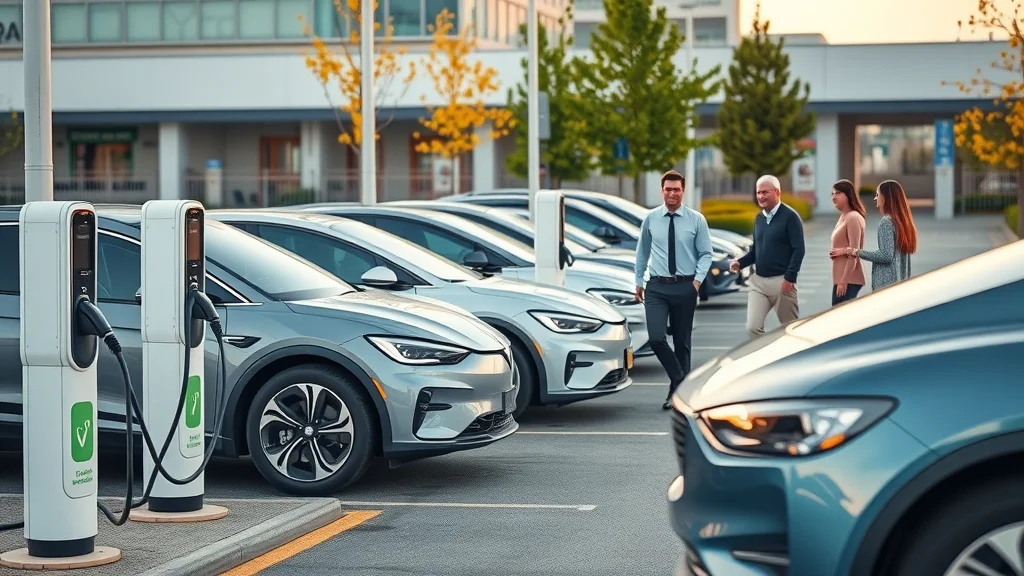
Could a parking lot charger actually boost your bottom line? Mississauga businesses are seeing visit times jump 50% and sales climb, plus rebates covering half the installation cost. Here’s what you need to know before installing one.
Key Takeaways
- Mississauga businesses that install onsite EV chargers can see customer visit times climb by as much as 50%, giving shoppers and diners more time near storefronts and menus.
- EV sales in Canada have grown over the past year after a decline in 2025, while Ontario held a 38.6% share of Canada’s EV charging station market in 2025.
- Government and utility incentives can offset up to half the cost of a commercial charger installation, making the investment easier to justify for plazas, offices, and hotels.
- Choosing between a Level 2 charger and a DC Fast Charger depends heavily on how long customers typically stay onsite, a decision worth thinking through before committing to hardware.
- A home Level 2 charger installation typically costs between $2,000 and $2,500 in total, a useful benchmark when scoping a larger commercial project.
Parking lots across Mississauga are quietly turning into revenue generators, and the shift comes down to one simple addition: an EV charging station. Business owners weighing the investment want to know whether the payoff is real, and the numbers suggest it is. This piece walks through why charging access changes customer behaviour, what equipment fits different business types, and how incentives make the upfront cost far more manageable, with practical detail drawn from EV charger installation Mississauga planning work happening across the region.
Onsite Charging Lifts Visits by 50%
Businesses in Mississauga that add onsite EV charging can push customer visit times up by as much as 50%. That single statistic explains why plazas, hotels, and office parks are treating chargers less like an amenity and more like a business strategy. A driver who plugs in for a charge cannot simply grab a coffee and leave the way a gas-station customer might; the vehicle needs time, and that time gets spent somewhere nearby.
Charging sessions typically run 15 to 30 minutes, according to independent survey findings, a window considerably longer than a quick gas fill-up. That extra time translates directly into browsing, ordering, and spending opportunities for whatever business sits closest to the charger. For a retail plaza or restaurant, a longer visit is often the difference between a customer walking past and a customer walking in.
Why Charging Stops Turn Into Sales
The connection between dwell time and revenue can be measured directly through sales data. Industry reporting shows that a 1% increase in customer dwell time can lead to a 1.3% increase in sales for retailers, a ratio that makes every extra minute onsite financially meaningful. For a business with steady foot traffic, adding a charging station is one of the more direct ways to influence how long customers linger.
Longer Sessions Mean More Store Time
While an EV charges, roughly half of drivers who stop at a charging site enter the adjacent retail or food space. That habit turns a parking spot into a doorway. Shopping centres, cafes, and service businesses situated near a charger benefit from a captive audience that has nowhere pressing to be for the next quarter-hour or more, making impulse purchases and unplanned visits far more likely than they would be near a standard parking stall.
Charging Access Builds Repeat Loyalty
Loyalty is where charging access really compounds in value. A survey of more than 700 EV owners found that 81% said charging availability makes them more loyal to a business. Over 70% of EV drivers use public charging regularly even when they have access to charging at home or work, meaning a well-placed commercial station can become a genuine habit-forming destination rather than a one-time novelty. Businesses offering EV charging also tend to attract new customers who spend more time and money at locations where they can plug in, reinforcing a cycle of repeat visits that few other amenities can match.
Mississauga’s EV Surge Creates Opportunity
Electric vehicle ownership in Mississauga and across Canada continues to grow, with sales climbing over the past year following a decline in 2025. Ontario held a 38.6% share of Canada’s EV charging station market in 2025, positioning the province, and Mississauga within it, as a focal point for charging infrastructure demand.
Market projections point in the same direction: the Canada EV charging station market was valued at $44.0 million in 2026 and is expected to reach $84.0 million by 2031, a compound annual growth rate of 9.5%. That growth curve means businesses installing chargers now are positioning themselves ahead of a wave rather than reacting to one already crested. As Mississauga’s population of EV drivers grows, businesses without charging access risk looking dated next to competitors who offer it. Installing charging infrastructure also signals a commitment to sustainability, which appeals to environmentally conscious shoppers and tenants alike, and can extend to workplace satisfaction when employees have access to charging during their shift.
Selecting the Right Commercial Charger
Not every business needs the same charging setup, and matching equipment to the site’s traffic pattern is an early decision worth prioritizing. The two main options serving Mississauga’s commercial market are Level 2 chargers and DC Fast Chargers, and each suits a different kind of customer visit.
Level 2 Chargers for Everyday Business
Level 2 chargers suit most retail, hospitality, and office settings, offering a middle ground between charging speed and cost. These units work well anywhere customers are expected to stay for thirty minutes or longer, such as a shopping plaza, a hotel parking area, or a workplace lot where employees leave their vehicles for a full shift. Their moderate charging speed lines up with the dwell time these businesses already see, making Level 2 the more affordable entry point for most commercial properties.
DC Fast Chargers for High-Turnover Sites
DC Fast Chargers serve a different purpose entirely, delivering a much quicker charge suited to locations with high vehicle turnover. Highway rest stops, large entertainment centres, and busy retail corridors with fast-moving traffic benefit most from this option, since customers there are often passing through rather than settling in. The faster charge keeps parking spots available for the next driver, which matters more at high-volume sites than it does at a boutique retail plaza with a slower, steadier flow of visitors.
Incentives That Cut Installation Costs
Cost is often the first concern raised when a business considers a commercial charger, and the range of incentives available helps ease that hesitation considerably. The Canadian government, Province of Ontario, and local utilities together offer rebates that can offset up to 50% of total costs for a commercial EV charger installation, a substantial reduction for any business weighing the return on investment.
Several specific programs are worth knowing about:
- The federal Zero-Emission Vehicle Infrastructure Program provides funding toward charging deployment nationwide, supporting Canada’s broader commitment to zero-emission vehicle sales.
- The Green Economy Canada incentive program offers funding for Level 2 and DC Fast Charging stations in Ontario, with recipients able to receive up to $5,000 per Level 2 port.
- Alectra Utilities, Mississauga’s local electricity distributor, introduced a new Electric Vehicle Charging (EVC) Rate effective January 1, 2026, an electricity delivery rate designed for eligible EV charging stations that better reflects the transmission costs of serving chargers with low load factors.
Stacking these programs against equipment and installation costs often makes the real out-of-pocket investment considerably smaller than the sticker price suggests. Businesses evaluating a project should factor incentives into the budget from the outset rather than treating them as an afterthought, since eligibility requirements and application timing can shape the overall project schedule.
Permits and Long-Term Reliability
No commercial charger installation in Ontario can begin without an electrical permit from the Electrical Safety Authority, and the work must be carried out by a licensed electrical contractor. This requirement protects businesses from wiring errors, code violations, and insurance complications down the road. Every piece of charging equipment installed also needs certification from a recognized agency such as CSA, cUL, or cETL before it can legally go into service, a detail worth confirming before any purchase is finalized.
Reliability after installation matters just as much as the installation itself. Regular maintenance checks and remote monitoring cut down on unexpected outages and help charging equipment last through years of daily use. Businesses that treat charger upkeep as an ongoing responsibility, instead of a one-time project, tend to see fewer service disruptions and a longer return on their initial investment.
EV Charging Pays Off for Mississauga Businesses
The case for onsite EV charging in Mississauga rests on a straightforward chain of cause and effect: longer visits lead to more spending, loyal EV drivers return more often, and government incentives make the upfront cost far more manageable than it first appears. Businesses that move early also capture an advantage over competitors still weighing the decision, particularly as EV ownership continues climbing across the region.
Choosing the right charger type, securing proper permits, and planning for long-term maintenance are the practical steps that turn a good idea into a working revenue driver. For businesses ready to assess what a project might look like on their own property, a professional EV charger installation assessment is a sensible starting point for mapping out equipment choices, incentive eligibility, and installation timelines.