


If your Burlington home still has knob and tube wiring, your insurance could be denied at renewal without warning. Find out why insurers are cracking down, what replacement really costs, and how to protect your home before it’s too late.
Key Takeaways
- Old knob and tube wiring lacks a safety ground and cannot safely handle the electrical loads modern homes demand, making replacement a priority for older Burlington properties
- Many home insurance providers in Ontario will not offer full coverage on properties with active knob and tube wiring, which can complicate policy renewals and home sales
- Replacing knob and tube wiring almost always involves a panel upgrade, since original fuse panels were never built to handle the demands of today’s appliances
- Costs, timelines, and what to expect from a licensed electrician are covered below, so homeowners know exactly what a replacement project involves
- Choosing a properly licensed electrician for the job protects both safety and insurance standing, a point Crown Electric Ltd emphasizes for homeowners weighing their options
Older homes in Burlington carry plenty of charm, but many also carry an electrical system that hasn’t been installed in new construction for decades. Knob and tube wiring was once the standard, and while it kept the lights on for generations, it now sits at the center of a growing conversation about home safety, insurance eligibility, and resale value. Understanding what this wiring is, why it matters, and how replacement works can save homeowners from unpleasant surprises down the road.
Why Most Insurers Won’t Cover This Wiring
Home insurance and knob and tube wiring have an uneasy relationship. Many home insurance providers in Ontario will not offer full coverage on properties with active knob and tube wiring, treating it as a red flag during underwriting. Some companies will decline a policy outright, while others might offer a short-term arrangement requiring full replacement within a set window, often somewhere between 30 and 60 days. A handful of insurers, including a few larger national names, may still write policies on homes with this wiring, but usually with higher premiums or added conditions attached.
For homeowners who already have coverage, the risk shows up later. Renewal time can bring a nasty shock if an inspector flags outdated wiring that wasn’t an issue years earlier, since underwriting standards have tightened across the province. Anyone shopping for a mortgage or refinancing may run into similar friction, since lenders often lean on the same risk assessments insurers use. Burlington homeowners often only learn their wiring is a problem after an insurance company flags it, which is exactly the kind of surprise a proactive inspection can prevent.
What Is Knob and Tube Wiring?
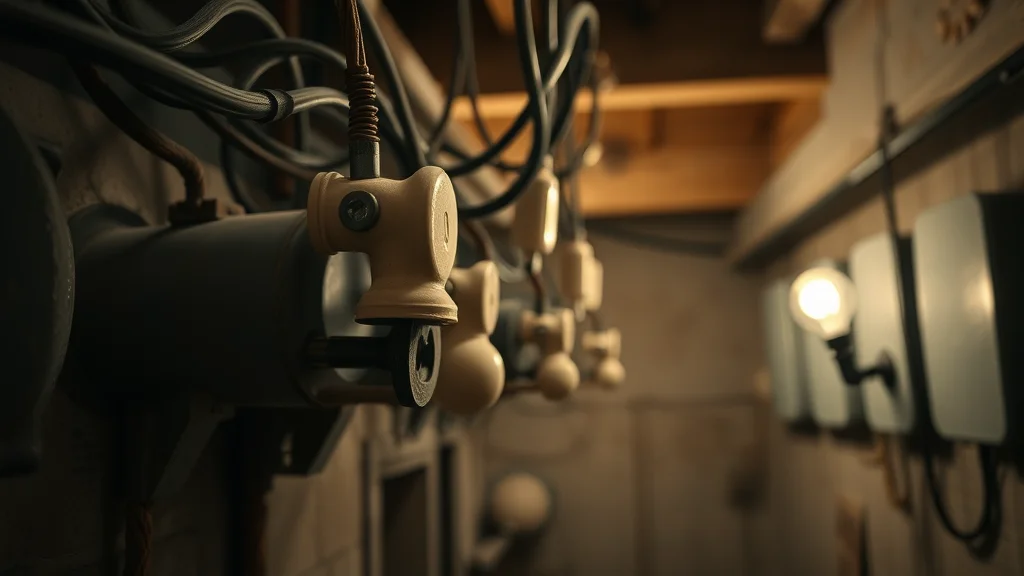
Knob and tube wiring earned its name from the ceramic knobs that support wires and the ceramic tubes that insulate them as they pass through wooden framing. This method served as the primary way homes across North America were wired from the 1880s until the 1940s, meaning most Burlington homes built during that era still have some trace of it, even if renovations have covered or partially replaced sections over the years. The design was clever for its time, using open air around each wire to help with cooling since the system lacked any modern protective sheathing.
Why It No Longer Meets Modern Electrical Needs
The trouble with knob and tube wiring today comes down to a mismatch between old technology and new demands. This wiring lacks a safety ground and is rated for lower electrical loads, which conflicts directly with the power needs of things like televisions, computers, kitchen appliances, and heating systems that weren’t around when the wiring was installed. Modern wiring solves this with a PVC or plastic sheath and an integrated ground wire, built to handle far higher loads safely. Homeowners who try to run a modern household on original tube wiring often notice tripped breakers, dimming lights, or appliances that simply won’t perform as expected, all signs the system is being pushed past its design limits.
The Hidden Dangers in Older Homes
Beyond inconvenience, aging wiring introduces real safety concerns that tend to worsen with time. Homes that still rely fully or partially on knob and tube systems face risks that go well beyond a flickering light bulb, and those risks compound the longer replacement gets delayed.
Fire and Shock Risks
The rubber and cloth insulation wrapped around the original wires can become brittle, crack, and fall away after 70 to 100 years, leaving bare wires exposed inside walls and ceilings. That kind of deterioration turns ordinary household activity into a fire hazard, especially in homes where insulation has been added around the wiring, since proper cooling depends on open air that newer insulation blocks. The lack of a grounding wire also raises the odds of electrical shock, since there’s no safe path to redirect excess electricity during a fault or power surge. Decades of amateur splices and modifications by previous owners can compound the problem further, hiding dangerous connections behind walls that look perfectly normal from the outside.
Insurance Coverage Complications
The safety risks and the insurance risks are closely linked, and one tends to feed the other. Dried insulation, brittle wires, and missing grounding are exactly what insurance companies point to when assessing risk on a property, and those same factors are what push premiums higher or coverage out of reach entirely. Homeowners who assume their existing policy will simply renew year after year sometimes learn otherwise once an inspector takes a closer look, particularly after a claim or a change in providers. Getting ahead of the issue with a professional assessment tends to be far less stressful than scrambling for coverage after a denial.
How Knob and Tube Replacement Works
Replacing knob and tube wiring follows a fairly consistent process, though the details shift depending on the size and layout of the home. Knowing the general steps ahead of time helps homeowners set realistic expectations for cost, timeline, and disruption.
Inspection by a Licensed Electrician
The process begins with a licensed electrician performing a detailed inspection of the home’s existing electrical system. This step maps out every instance of knob and tube wiring throughout the property, checks the condition of the current panel, and looks for past modifications or code violations that might complicate the job. Ontario’s Electrical Safety Authority recommends exactly this kind of assessment from a Licensed Electrical Contractor for any home still running knob and tube wiring, since a proper evaluation catches issues that aren’t visible without opening up walls or checking the attic and basement. The findings from this stage shape the replacement plan, including cost estimates and any panel work that will be needed.
Removal, Rewiring, and Panel Upgrades
Once the inspection is complete, the physical work begins with the safe removal of old wiring, followed by installation of new wiring built to current standards. Nearly every knob and tube replacement project involves some form of panel upgrade, since original fuse panels lack the capacity, safety, and flexibility that modern appliances and electronics demand. Many of these older systems are tied to 60-amp panels, and meeting today’s electrical demands typically means upgrading to at least 100 or 200 amps. The work usually proceeds room by room or floor by floor, which allows partial use of the home throughout the project, and everything wraps up with testing and an inspection from the Electrical Safety Authority before the new system goes live.
What Replacement Costs in Burlington
Budgeting for a knob and tube replacement depends heavily on the size of the home and how accessible the existing wiring is. Homes with finished walls throughout tend to cost more to rewire than those with an open, unfinished basement or attic, since electricians need to work around drywall, insulation, and finished ceilings.
- Small homes around 1,000 square feet generally run $7,000 to $10,000.
- Medium-sized homes between 1,500 and 2,000 square feet typically fall between $10,000 and $15,000.
- Larger homes at 2,500 square feet or more can range from $15,000 to $25,000 or higher.
A rough per-square-foot estimate across the Greater Toronto Area lands around $10 to $22, though the final number depends on several variables. A panel upgrade alone can add somewhere between $1,500 and $5,000 to the total, and permits along with required inspections add a modest cost that varies by municipality. Homeowners should also budget for drywall repair and painting after the electrical work wraps up, which can range anywhere from $150 to $2,000 depending on how much of the home needed to be opened up.
Choosing a Qualified Electrician
Not every contractor is equipped to handle a project this involved, and hiring the wrong one can create bigger headaches than the original wiring problem. Ontario law requires a Licensed Electrical Contractor with a 7-digit ECRA/ESA number to perform this kind of work, and that number should appear on any written estimate provided before the job begins.
A few questions can help separate a qualified electrician from one who isn’t ready for a project this complex:
- Does the contractor carry a valid ECRA/ESA license number, and will they provide it upfront?
- How many knob and tube replacement projects have they completed in the Burlington area specifically?
- Will they handle permits, coordinate the required Electrical Safety Authority inspection, and provide documentation for insurance purposes?
- Can they offer references from recent, similar projects nearby?
- Do they provide a detailed written estimate that accounts for a possible panel upgrade and any surprises found once walls are opened?
Homeowners in Burlington looking for guidance on hiring the right professional can find more detail through Crown Electric Ltd’s Burlington electrician resources, which cover licensing standards and what to expect from a properly credentialed contractor.
Replacing Old Wiring Protects Your Home’s Future
Knob and tube wiring remains legal in Ontario, though it carries risks that modern homeowners can’t easily ignore. Fire hazards, shock risks, and mounting insurance complications all point toward the same conclusion: replacement is an investment in safety rather than a cosmetic upgrade. A home rewired to current standards tends to sell faster, qualify for better insurance terms, and support the kind of electrical demands that come standard in a modern household, from EV chargers to smart home devices.
Delaying the decision rarely makes it easier, since insurance requirements continue tightening and the wiring itself only grows more brittle with time. Homeowners who schedule an inspection sooner rather than later gain the advantage of planning the work on their own timeline instead of scrambling after a denied claim or a failed insurance renewal. For a clear next step, consider scheduling a licensed electrical inspection to find out exactly where an older Burlington home stands.