


Key Takeaways
- Every EV charger installation in Ontario legally requires a permit from the Electrical Safety Authority (ESA) – skipping it can result in fines, forced shutdowns, or voided insurance.
- Level 2 chargers are the standard for residential use, but they require a panel capacity check before any work begins.
- Only a Licensed Electrical Contractor (LEC) can legally perform this work in Ontario – DIY is not a grey area here.
- A completed installation should always end with an ESA Certificate of Acceptance – find out below why that document matters more than most homeowners realize.
- Crown Electric Ltd, based in Oakville, follows a structured five-step installation protocol designed to keep every job safe, code-compliant, and inspection-ready.
Installing an EV charger at home feels straightforward – until the permit requirements, panel math, and wiring logistics come into focus. For Oakville homeowners making the switch to electric, understanding the full installation process before calling anyone is the difference between a smooth job and a costly redo.
Miss One Step, Risk Fines, Fires, or a Forced Shutdown
Licensed electricians treat EV charger installation as a structured protocol rather than a quick wiring job – and for good reason. Skipping even one step, especially the permit, can trigger a surprise ESA inspection that forces a complete shutdown of a perfectly functioning unit. Unpermitted work can also void your home insurance, expose you to fines, and create conditions for an electrical fire.
Installing without a permit or using an unlicensed tradesperson is a safety risk, not just a technicality. Ontario’s Electrical Safety Code exists because high-amperage circuits – the kind Level 2 chargers run on – demand careful handling. The checklist below reflects the protocol that qualified electricians follow on every job.
Level 1 vs. Level 2: Choose Before You Plan
The type of charger chosen shapes everything that follows – the wiring, the panel load, and the permit scope. Here’s how they compare:
- Level 1 (120V): Plugs into a standard household outlet. Adds roughly 6-8 km of range per hour. No dedicated circuit is usually required, but charging is slow – overnight for partial top-ups, and days for a depleted battery.
- Level 2 (240V): Requires a dedicated circuit, typically 40-50 amps. Adds 30-50 km of range per hour. This is the practical choice for most Oakville homeowners who drive daily.
Daily driving distance, vehicle battery size, and how often the car charges at home all factor into this decision. For most households, Level 2 is the right call – but it also triggers panel reviews, permits, and professional installation requirements.
One important note: whichever unit gets installed, it must carry an official Canadian certification mark – either CSA or cUL. Uncertified hardware will not pass ESA inspection and may not be covered by home insurance in the event of an incident.
Your Panel Capacity Comes First
Before a single wire gets run, the home’s electrical panel needs to be evaluated. A Level 2 charger typically draws 40 amps continuously on a 50-amp dedicated breaker. Older Oakville homes with 100-amp panels – or panels already running near capacity – may not support this load without an upgrade.
A licensed electrician will calculate the home’s existing load and identify whether there is enough headroom. If there is not, a panel upgrade becomes part of the project scope. This is a required safety step, not a surprise add-on. Crown Electric Ltd includes this capacity review as part of their standard pre-installation process, so there are no surprises mid-job.
When Oakville Hydro Must Be Contacted
If a panel upgrade is needed, Oakville Hydro should be contacted before work begins. Their role is to confirm that the home’s service size – the line running from the street – can support the upgraded panel. In some cases, the utility-side service also needs upgrading, which Oakville Hydro coordinates separately. Getting this confirmation early prevents delays and ensures the whole system, from the street to the charger, is sized correctly.
The 5-Step Installation Protocol
This is the process a licensed electrician follows on every residential EV charger job. Each step exists for a reason – safety, compliance, or both.
1. Wiring Inspection
The job starts with a thorough inspection of the existing electrical wiring. Any cracks, deterioration, improper connections, or outdated wiring – such as aluminum wiring in older homes – must be identified and addressed before the new circuit is added. A fault in the existing system does not just affect the charger; it compromises the entire installation.
2. Main Power Shutoff and Voltage Test
Before any work touches the panel, the main breaker is shut off. A voltage tester then confirms that no live current remains in the lines being worked on. This is a non-negotiable safety step. Working on a circuit that has not been properly de-energized is one of the leading causes of electrician injuries and installation failures.
3. Permit Submission to the ESA
This is the step most DIY attempts skip – and the one that creates the biggest problems later. In Ontario, all EV charger installations require a notification of work (electrical permit) submitted to the Electrical Safety Authority before installation begins. The permit triggers ESA oversight and ensures the work will be inspected and certified upon completion.
Skipping this step does not just risk a fine. The installation becomes technically illegal, insurance may not cover fire or damage related to the charger, and the ESA Certificate of Acceptance – which matters at resale – will never be issued.
4. Running New Wiring, Mounting, and Connecting
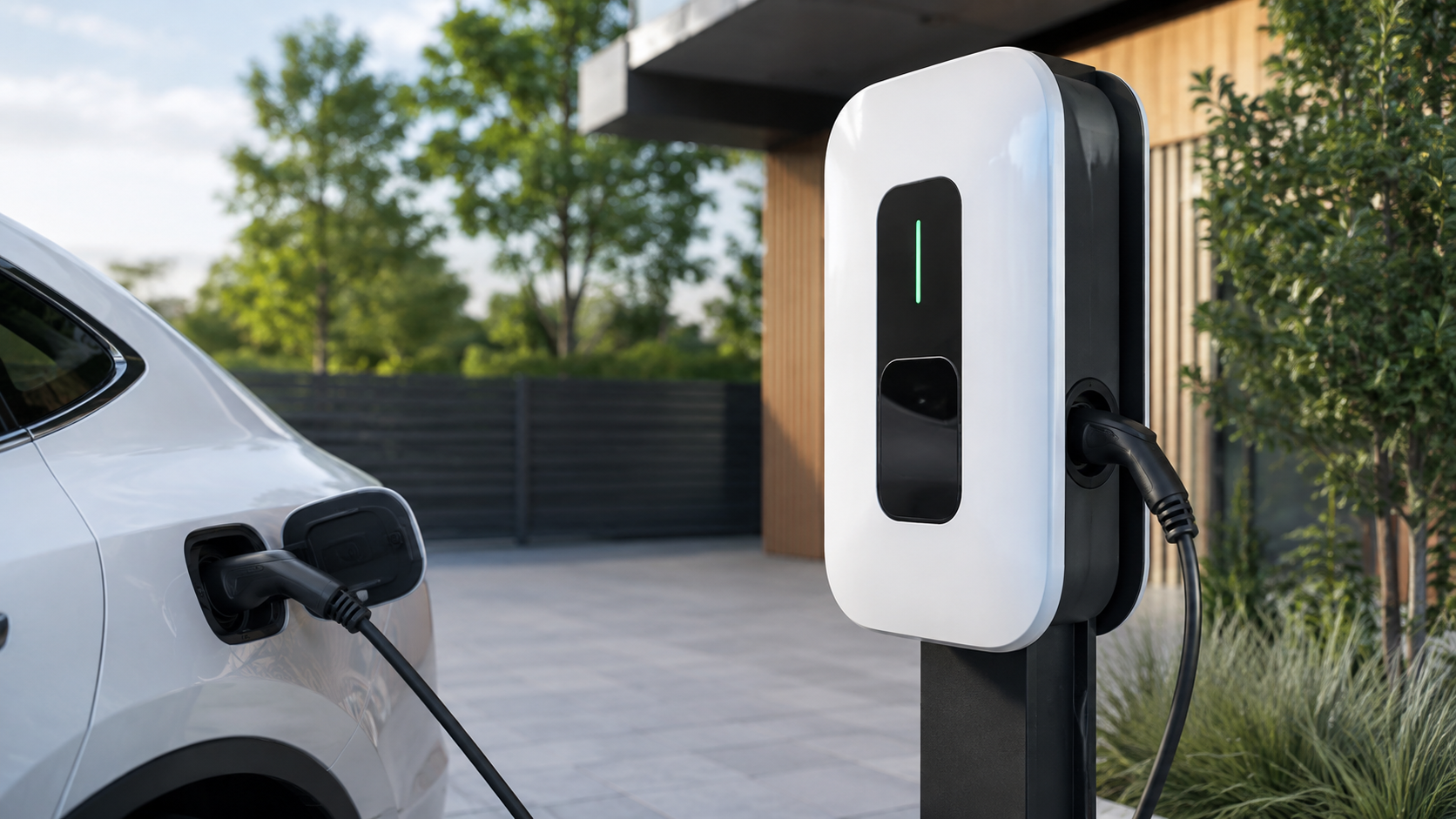
With the permit in place and the panel de-energized, new wiring is run from the electrical panel to the designated charger location. The cable gauge, conduit type, and routing all follow the Ontario Electrical Safety Code. The charger unit is then securely mounted – on a garage wall in most residential installs – and connected to the new dedicated circuit.
Proper mounting matters beyond appearances. A charger that is not securely fastened or correctly positioned can create strain on the cable connections over time, increasing the risk of a loose connection or arcing.
5. Final Connection Check
Once everything is connected and the panel is re-energized, a thorough check of every connection confirms the installation is tight, properly terminated, and functioning as intended. This is also when the ESA inspector reviews the work. A job done to code passes cleanly – no reinspection fees, no required corrections, no delays before the charger can be used.
Only a Licensed Electrical Contractor Can Do This Legally
In Ontario, EV charger installation is not a permitted DIY activity. Only a Licensed Electrical Contractor (LEC) – registered with the Electrical Contractor Registration Agency (ECRA) – is legally authorized to perform this work. This is enforced by the ESA, and non-compliant installations are identified through inspections and insurance claims.
Hiring an LEC also provides practical protection: licensed contractors carry liability insurance, their work is warrantied, and they are responsible for the permit and inspection process from start to finish.
ESA Certificate of Acceptance: Why It Matters
Once a licensed contractor completes the installation and the ESA inspector approves it, the homeowner receives an ESA Certificate of Acceptance. This document confirms the installation met Ontario’s electrical code at the time of completion. It matters in two specific situations:
- Insurance claims: If an electrical fire or incident occurs, insurers will ask whether the installation was permitted and certified. Without the certificate, a claim related to the charger may be denied.
- Home resale: Buyers, home inspectors, and their lawyers increasingly ask for ESA documentation on EV charger installations. A missing certificate can delay or derail a sale.
What Oakville Homeowners Pay for This Work
Cost varies based on panel condition, charger location, and whether an upgrade is needed. Here is a realistic breakdown for Oakville residential installs:
- Standard Level 2 installation (panel has capacity, short wiring run): $1,500 – $3,000
- Installation including an electrical panel upgrade (100A to 200A service): $3,300 – $6,500 total, depending on scope
These figures reflect typical Ontario market pricing. The ESA permit fee is generally included in a contractor’s quote. Always confirm what is included – permit, inspection, hardware, and labour – before accepting an estimate. Upfront, itemized quotes are the standard for reputable contractors and make it easier to compare estimates accurately.
Crown Electric Handles Every Step – Get an Estimate
For Oakville homeowners ready to move forward, the clearest path is a proper site assessment from a licensed contractor who knows the local permit process, Oakville Hydro’s service requirements, and the Ontario Electrical Safety Code. Crown Electric Ltd has been doing exactly that – for residential, commercial, and industrial clients across Oakville and the surrounding area – for over 30 years.
The five-step protocol outlined here is the standard. A contractor who skips steps or downplays the permit process is not saving time – they are creating liability for the homeowner.
For a no-obligation estimate on EV charger installation, visit crownelectricltd.ca or call Crown Electric Ltd directly at 905-847-2804.