



A Surprising Look at Ontario Licensed Electrician Requirements
-
Did you know? Ontario boasts over 15,000 actively licensed electricians, a number that continues to rise with the growth of new construction and green energy projects. Yet, fewer than 20% of applicants pass the certificate of qualification exam on their first attempt, highlighting just how rigorous the process is for entering this vital skilled trade.
What You’ll Learn About Ontario Licensed Electrician Requirements
-
All mandatory steps for becoming a licensed electrician in Ontario
-
Key details on professional certification, exams, and training
-
Differences between electrician levels and licensing categories
-
Insights into electrician career prospects and regulations
Overview of Ontario Licensed Electrician Requirements
-
Role and definition: An Ontario licensed electrician is an individual certified to safely install, maintain, and repair electrical systems according to provincial standards and electrical safety codes.
-
Regulatory authority: The Electrical Safety Authority (ESA) and Skilled Trades Ontario oversee licensing, examinations, and compliance for licensed electrical work in the province.
-
Electrical contractor vs. master electrician: A contractor holds a business licence to hire or offer services to clients, while a master electrician is responsible for code compliance and technical supervision within electrical contracting companies.
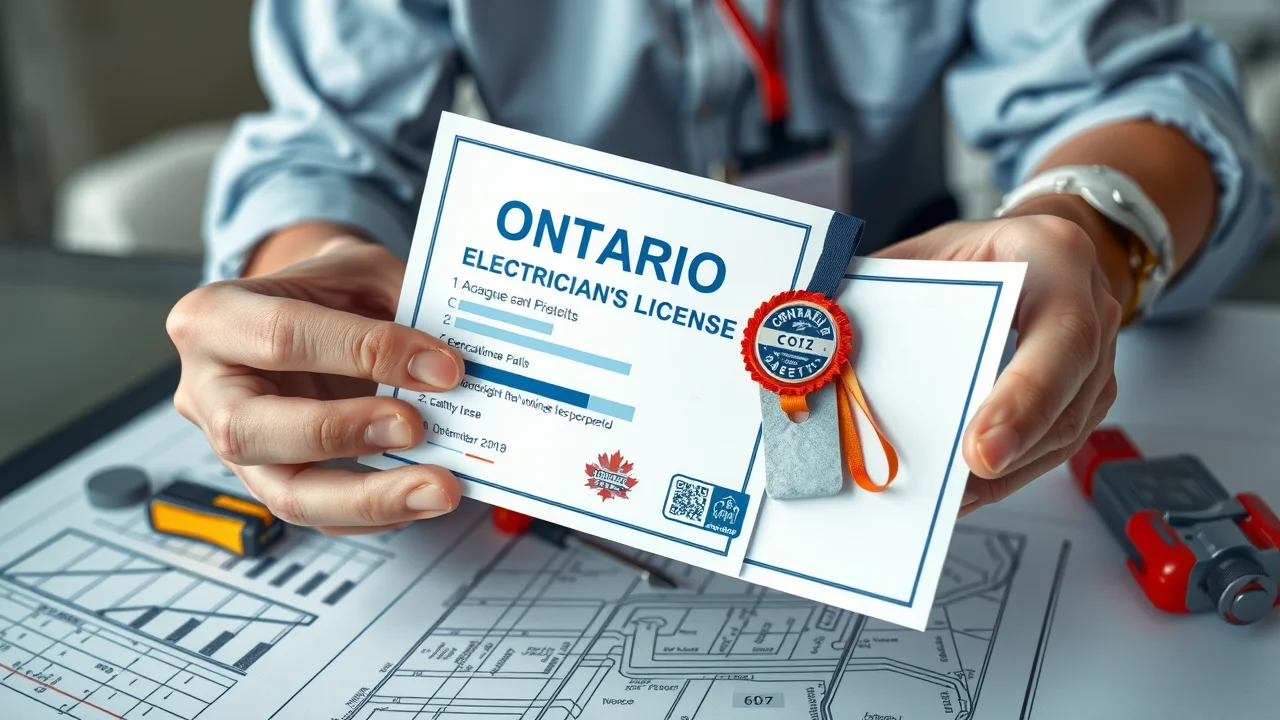
Basic Qualifications for Ontario Licensed Electrician Requirements
-
High school diploma and admission requirements: To begin the pathway towards becoming a licensed electrical apprentice, a high school diploma is generally required by employers and apprenticeship sponsors. Meeting the Ontario Secondary School Diploma (OSSD) standard—especially with credits in math, science, and English—is essential.
-
Importance of a school diploma for starting as an electrical apprentice: Most companies and the province’s Skilled Trades Ontario regulator require official proof of education. This credential verifies basic literacy and numeracy for entering skilled trades and undergoing workplace safety training.
-
Required foundation in math and physics: Subjects like math (especially algebra and applied mathematics) and physics provide the logical problem-solving and technical skills needed for electrical work, code reading, and troubleshooting wiring systems.
“A solid grounding in math and sciences in high school is invaluable for future electricians,” says industry trainer Mark Bennett.
Electrical Apprentice Pathway and Training Steps
-
Ontario electrical apprentice registration process: Apply for an apprenticeship with Skilled Trades Ontario, meet eligibility (typically via a sponsoring employer), and register formally to start accumulating work experience and technical training hours.
-
Duration of apprenticeship and practical requirements: The standard apprenticeship program for Construction and Maintenance Electricians in Ontario lasts about 5 years, including at least 9,000 hours of combined classroom and practical experience.
-
Classroom training: construction and maintenance focus: Apprentices participate in three scheduled 8–10 week blocks of technical school during their apprenticeship, covering safety, electrical theory, code interpretation, and hands-on installations related to the construction and maintenance of electrical systems.
|
Apprenticeship Schedule: Classroom vs. On-the-Job Hours |
||
|
Stage |
Classroom Instruction (Hours) |
On-the-Job Training (Hours) |
|---|---|---|
|
Basic Level |
240 |
2,500 |
|
Intermediate Level |
240 |
3,000 |
|
Advanced Level |
240 |
3,260 |
|
Total |
720 |
8,760 |
Obtaining the Certificate of Qualification: Ontario Licensed Electrician Requirements
-
Eligibility for the certificate of qualification exam: After successfully completing your apprenticeship program and logging the required on-the-job hours, you become eligible to write the certificate of qualification exam for Construction and Maintenance Electrician (309A).
-
Exam components and preparation resources: The qualification exam covers electrical code, wiring practices, safety protocols, troubleshooting, and installation standards. Preparation tools include the Canadian Electrical Code, online sample tests, and official exam prep courses from colleges or Skilled Trades Ontario.
-
Cost and booking information: Exam fees typically range from $150 to $250. You must apply through Skilled Trades Ontario, submit documents, schedule your exam, and bring proper identification for the test centre.
“Passing the certificate of qualification exam is the gateway to an independent electrical career,” notes a representative from the Ontario College of Trades.

Steps to Get an Ontario Electrical Contractor Licence
-
Contractor licence prerequisites and application steps: To obtain an electrical contractor licence, applicants must designate a qualified master electrician, provide proof of liability insurance, and register their business with the Ontario government. Applicants fill out forms and pay required licensing fees (over $600 in most cases).
-
Electrical contractor licence vs. master electrician licence: The contractor licence allows companies to legally offer, schedule, and invoice for electrical work. In contrast, the master electrician licence certifies the technical supervisor, accountable for code compliance and jobsite safety.
-
Business registration and insurance requirements: Licensing demands valid business registrations (sole proprietor, partnership, corporation), adequate liability coverage, and Workplace Safety and Insurance Board (WSIB) clearance for hiring staff.
Advancing to Master Electrician: Specialized Requirements
-
How to become a master electrician in Ontario: To advance, you must already hold a certificate of qualification and have at least three years of practical experience in the electrical trade after earning that certification. Master electrician candidates must then pass a separate, more advanced exam administered by the ESA.
-
Master electrician exam and ongoing qualification: The exam covers electrical code, business and legal regulations, workplace safety, and jobsite supervision. Master electricians must maintain their licence by attending required continuing education and staying up-to-date on code changes.
-
Responsibilities unique to master electricians and licensed electrical contractors: Master electricians are responsible for designing, planning, supervising, and verifying compliance on behalf of contractors. They ensure all electrical work meets Ontario’s rigorous safety standards and legislation.

Continuing Education & Maintaining Status as a Licensed Electrical Contractor
-
Renewal cycles and fees for licensed electrician requirements: Licences must be renewed regularly (usually every 12 months for contractors and every 3 years for most tradespeople) with applicable fees to remain in good standing.
-
Mandatory safety training and code updates: Licensed electrical professionals must complete ongoing training covering changes in safety codes, new electrical technologies, and practical workplace updates. Missing these can result in licence suspension.
-
Implications of letting your licence lapse: Failing to renew promptly can mean starting the entire licensing process anew, paying reactivation fees, or exposing yourself to legal risks and penalties for unlicensed work.
Career Opportunities and Growth for Ontario Licensed Electricians
-
In-demand sectors for electrical contractors and master electricians: From residential construction and commercial maintenance to renewable energy projects and large infrastructure, the demand for skilled trades is increasing. Licensed electrical professionals are crucial in industrial automation, facility upgrades, and municipal works.
-
Expected salaries for licensed electrical professionals: Journeyperson electricians often earn $30–$45 per hour, while experienced master electricians and contractors can command annual salaries exceeding $100,000 depending on specialization, union affiliation, and region.
-
Long-term prospects and advancement trends: As Ontario strives for energy efficiency and further development of smart technologies, electrical contractors and master electricians will remain in high demand. With the province updating regulations and promoting green jobs, career opportunities are bright for new entrants.

Ontario Licensed Electrician Requirements: Key Compliance and Safety Standards
-
Legal scope of licensed electrical work: Only those holding valid certification and licences may conduct electrical work on residential, commercial, or industrial systems in Ontario. Unlicensed work exposes owners and businesses to significant legal and safety risks.
-
Inspection and permit obligations: Every major wiring, installation, or upgrade project requires proper electrical permits and must pass inspection by the ESA or municipal inspectors before connecting to the public grid.
-
Penalties for unlawful or unlicensed electrical work: Individuals and businesses who fail to comply with the Ontario Electrical Safety Code face steep fines, forced rework, and even criminal charges for hazardous or unpermitted work.
People Also Ask: Ontario Licensed Electrician Requirements
What is required to become an electrician in Ontario?
-
To become an electrician in Ontario, you must complete a high school diploma or equivalent, register as an electrical apprentice, finish both classroom and on-the-job training through a government-approved apprenticeship program, and then pass the certificate of qualification exam. Once certified, you’ll be legally recognized as a licensed electrical professional and can work independently or under an electrical contractor.
How long does it take to get an electrician license in Ontario?
-
The typical path takes around 5 years, including about 9,000 hours of combined practical and classroom training as an apprentice. Additional time may be needed to prepare for and pass the certificate of qualification exam. Overall, most individuals reach licensed status in 5–6 years from start to finish.
What is the difference between level 2 and level 3 electrician?
-
Level 2 (Intermediate) electricians have completed basic skills and mid-level classroom training, allowing supervised work on more advanced installations. Level 3 (Advanced) electricians meet the final training stage prior to writing their qualification exam. Higher levels mean greater autonomy, more responsibility on the worksite, and eligibility to supervise apprentices.
What electrical work can be done without a license in Ontario?
-
Certain minor work in your own single-family home, such as changing light fixtures or switches, may be done by the homeowner. However, installing new wiring, service panels, or any commercial or multi-unit residential work must be carried out by licensed professionals. All other work falls under strict ESA regulations with limited legal exemptions.
Ontario Licensed Electrician Requirements: FAQs
-
Do you need a high school diploma to become an electrician in Ontario?
Yes, a high school diploma or equivalent is required for most apprenticeship sponsors and for registration with Skilled Trades Ontario. -
How often do Ontario licensed electricians need to renew their licences?
Licensed electricians generally renew every three years, while contractor licences require annual renewal with proof of insurance and continuous professional development. -
What happens if you fail the certificate of qualification exam?
You may retake the exam after further preparation and paying additional fees, but repeated failures can delay your licensed status and limit job prospects in skilled trades Ontario. -
Can international electricians get licensed in Ontario?
Yes, but they must have their credentials evaluated, fill training or education gaps, and pass the qualification exam before being eligible for licensure in Ontario.
Key Takeaways: Navigating Ontario Licensed Electrician Requirements
-
Follow the complete pathway: from high school diploma and apprenticeship to passing your certificate of qualification and pursuing a contractor or master electrician licence.
-
Stay current with Ontario Electrical Safety Code updates, attend continuous education, and maintain your licensing without lapses to protect your career.
-
Seek reputable apprenticeship sponsors and use official resources to prepare for exams. Avoid shortcuts or working unlicensed, as penalties are severe in Ontario.
Ready to Start? Get a Licensed Electrical Contractor Estimate
-
For reliable licensed electrical work in Ontario, call us at 905-847-2804 for an estimate.
Conclusion
Becoming a licensed electrician in Ontario is a challenging but rewarding process. With the right guidance and thorough preparation for each requirement, you’ll ensure a long and prosperous career in this vital skilled trade.
Sources
-
Ontario.ca – https://www.ontario.ca/page/electrician-apprenticeship
-
Ontario.ca – https://www.ontario.ca/document/your-guide-apprenticeship-ontario/becoming-apprentice
-
Skilled Trades Ontario – https://www.skilledtradesontario.ca/
-
Ontario College of Trades – https://www.collegeoftrades.ca/apply-for-certification/
To become a licensed electrician in Ontario, individuals must complete a comprehensive process that includes education, apprenticeship, certification, and licensing. The Electrical Safety Authority (ESA) and Skilled Trades Ontario oversee this process to ensure all electrical work adheres to provincial safety standards.
Educational Requirements: Prospective electricians should have a high school diploma, with a strong foundation in mathematics and physics. While the minimum education required is Grade 10, many programs prefer candidates with Grade 12 education, especially in the unionized sector. (electricianintoronto. ca)
Apprenticeship Program: After meeting the educational prerequisites, candidates must complete a 9,000-hour apprenticeship, combining on-the-job training with classroom instruction. This typically spans five years and includes approximately 840 hours of in-class training. (skilledtradescollege. ca)
Certificate of Qualification: Upon completing the apprenticeship, individuals must pass the Certificate of Qualification exam to demonstrate their knowledge of electrical codes, safety regulations, and practical skills. Successful candidates earn the Red Seal Certification, allowing them to work as electricians across Canada. (canadianelectrician. ca)
Licensing: To legally operate as an electrician in Ontario, obtaining the appropriate licenses is essential:
Master Electrician License: Requires at least three years of practical experience as a licensed journeyman electrician and passing the Master Electrician Exam.
Licensed Electrical Contractor (LEC): Electrical companies must be registered as LECs with the ESA, ensuring adherence to the Ontario Electrical Safety Code, maintaining liability insurance of at least $2 million, and employing a Master Electrician. By fulfilling these requirements, electricians in Ontario can ensure they meet the province’s standards for safety and professionalism in the electrical trade.
Look through our home page at https://crownelectricltd.ca for more information.